

What is an Abscess?
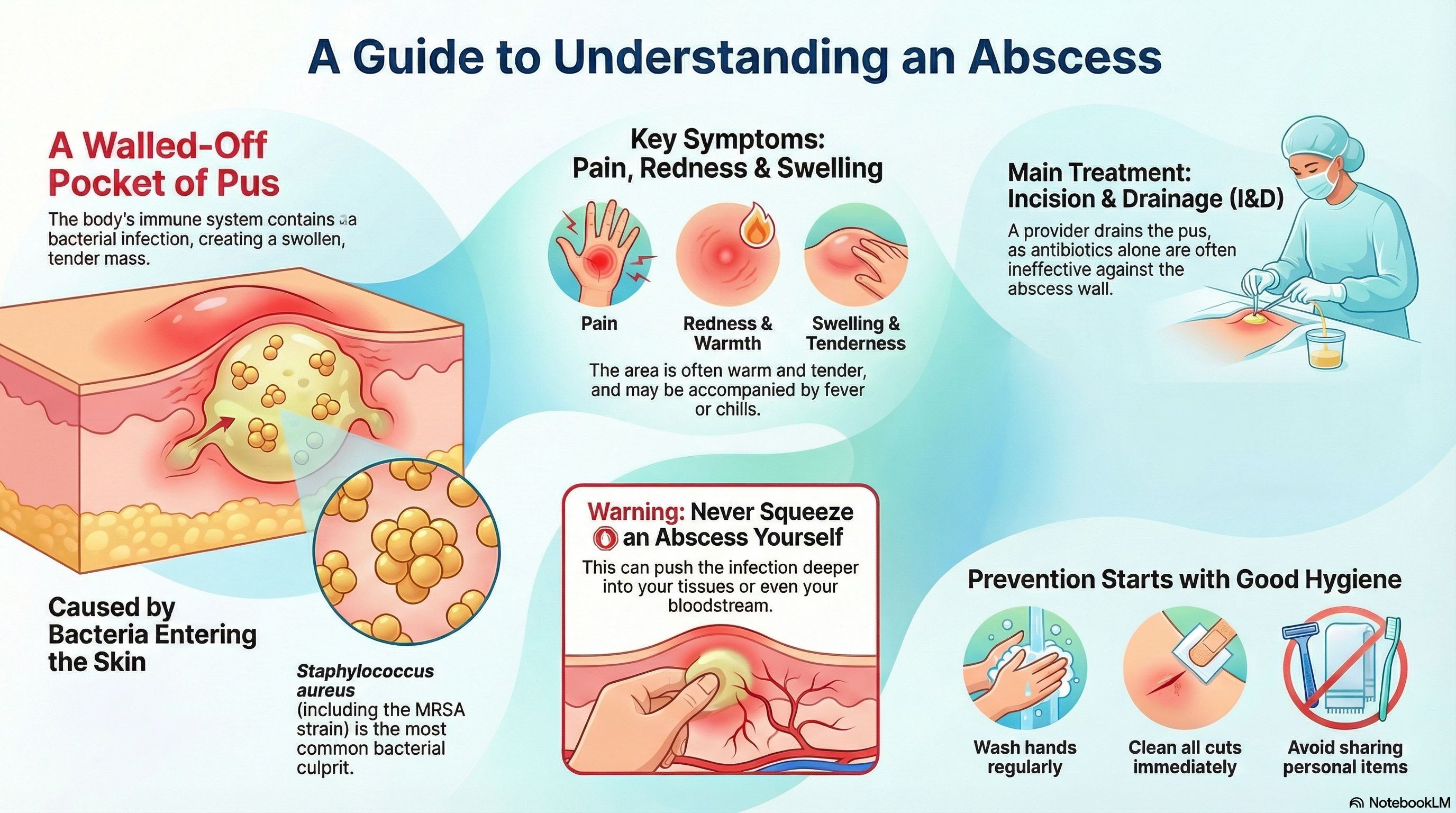
An abscess is a localized collection of pus that forms within the body’s tissues, typically as a result of an infection. Most commonly seen on the skin, it appears as a swollen, red, and tender mass. The center of the mass is often "fluctuant," meaning it feels soft or liquid-filled because it is packed with pus—a mixture of white blood cells, dead tissue, and bacteria.
While an abscess can develop anywhere—including internal organs like the liver or brain—skin abscesses are the most frequent. They occur when the body’s immune system tries to "wall off" an infection to prevent it from spreading to other areas.
Causes of an Abscess
The primary cause of an abscess is a bacterial infection. When bacteria enter the body through a small cut, an insect bite, or a blocked oil gland, the immune system sends white blood cells to the area, leading to inflammation and pus formation.
Common Bacterial Culprits:
-
Staphylococcus aureus: This is the most common cause. A significant number of skin abscesses are caused by MRSA (methicillin-resistant S. aureus), which is a strain resistant to many common antibiotics.
-
Polymicrobial Infections: Some abscesses contain a mix of different bacteria found on the skin or from nearby mucous membranes.
Contributing Factors:
-
Minor skin injuries (splinters, cuts, or abrasions).
-
Blocked sweat glands or inflamed hair follicles (often resulting in boils).
-
Underlying conditions like hidradenitis suppurativa (a chronic skin condition).
-
Foreign objects lodged under the skin.
Symptoms of an Abscess
Symptoms usually develop over several days and can be felt locally or throughout the entire body if the infection is severe.
Local Symptoms:
-
A painful, firm, or squishy lump.
-
Redness and intense warmth in the affected area.
-
Visible pus or a "point" where the abscess may be getting ready to drain.
-
Swelling and tenderness that worsens as the pressure inside the abscess builds.
Systemic (Full-Body) Symptoms:
-
Fever and chills.
-
General fatigue or feeling unwell.
-
Swollen lymph nodes near the site of the infection.
Diagnosis of an Abscess
In many cases, a doctor can diagnose a skin abscess simply by looking at it and feeling the area. However, further steps may be taken to ensure the best treatment plan.
Clinical Evaluation: Your doctor will check for "fluctuance" (the feel of liquid under the skin) and look for signs that the infection is spreading to the surrounding skin (cellulitis).
Imaging:
-
Ultrasound: This is a very helpful tool to see how deep the abscess goes or to confirm if a lump is actually an abscess rather than a solid mass. It helps the doctor plan exactly where to make an incision.
-
CT or MRI: These are generally reserved for internal abscesses (in the abdomen or brain) to determine their exact size and location.
Lab Tests: If the abscess is drained, the doctor may send a sample of the pus to a lab to identify the specific bacteria causing the infection. This is especially important to check for MRSA and ensure the right antibiotics are used if needed.
Treatment of an Abscess
The Mainstay: Incision and Drainage (I&D) For most abscesses, antibiotics alone are not enough because the medicine cannot easily penetrate the "wall" the body has built around the pus. The most effective treatment is Incision and Drainage. A healthcare provider will numb the area, make a small cut, and evacuate the pus and debris. They may also "probe" the cavity to ensure all pockets of infection are cleared.
Antibiotics: Antibiotics are not always necessary after a successful drainage. However, your doctor will prescribe them if:
-
You have a weakened immune system or diabetes.
-
The infection is spreading (cellulitis).
-
You have signs of a systemic infection (fever/chills).
-
The abscess is in a high-risk area, such as the face.
Home Care:
-
Small Abscesses: Very small, superficial abscesses (less than 0.5 cm) may drain on their own with the help of warm compresses applied for 20 minutes several times a day.
-
Post-Procedure Care: After drainage, keep the area covered with a clean, dry dressing. Never attempt to squeeze or pop an abscess yourself, as this can push the infection deeper into your bloodstream or surrounding tissues.
Prevention of an Abscess
You can reduce your risk of developing future abscesses by practicing good hygiene and skin care.
Hygiene Habits:
-
Wash your hands regularly with soap and water.
-
Clean and disinfect even minor cuts, scrapes, or insect bites immediately.
-
Avoid sharing personal items like razors, towels, or athletic equipment.
Skin and Health Care:
-
Keep your skin clean and dry, especially in areas prone to friction like the armpits or groin.
-
If you have a chronic condition like diabetes, work closely with your doctor to keep it well-controlled, as high blood sugar can make it harder for your body to fight skin infections.
-
Treat underlying skin conditions like acne or eczema promptly to prevent bacteria from entering through broken skin.