

What is a Brain Aneurysm?
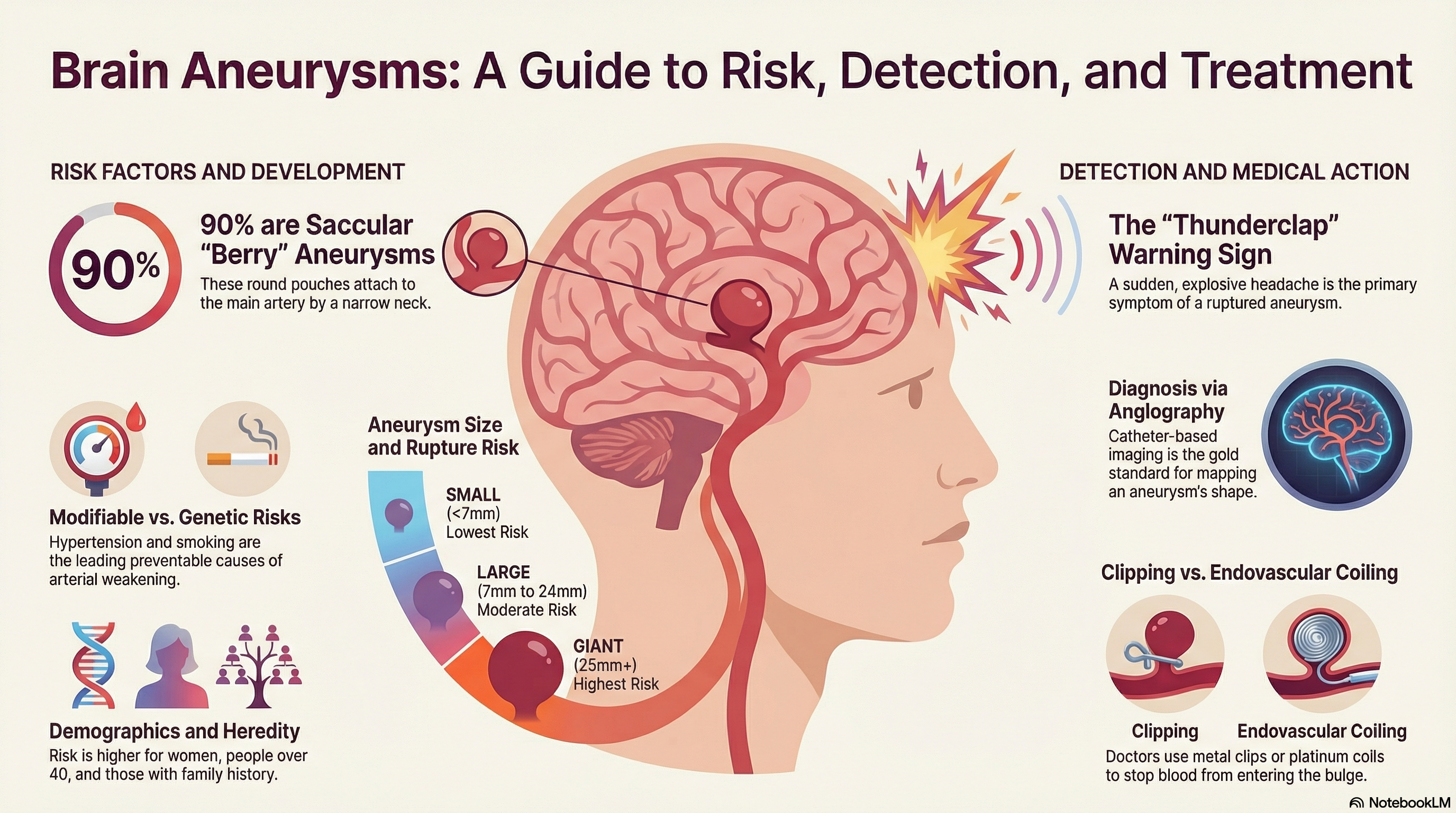
There are several types of brain aneurysms, though nearly 90% are saccular (berry) aneurysms. These are round pouches that attach to the main artery by a narrow "neck." Less common types include fusiform aneurysms, where the entire artery bulges outward on all sides, and mycotic aneurysms, which are caused by an infection in the artery wall.
Most aneurysms occur in the Circle of Willis, a ring of arteries at the base of the brain. They are categorized by size:
-
Small: Less than 7mm (lowest risk of rupture).
-
Large: 7mm to 24mm.
-
Giant: 25mm or larger (highest risk of rupture).
Causes of Brain Aneurysm
Aneurysms develop when the walls of an artery become thin and weak, often due to a combination of genetic factors and wear and tear over time.
Non-Modifiable Risk Factors:
-
Family History: Having two or more first-degree relatives with an aneurysm significantly increases your risk.
-
Genetic Disorders: Conditions like Polycystic Kidney Disease (ADPKD), Ehlers-Danlos syndrome, and Marfan syndrome are strongly associated with weakened artery walls.
-
Demographics: Aneurysms are more common in women than men and are most frequently diagnosed in people over the age of 40.
Modifiable Risk Factors:
-
Hypertension (High Blood Pressure): This is the leading cause of stress on the artery walls.
-
Smoking: Cigarette smoking significantly weakens the arteries and is the most important preventable risk factor for both formation and rupture.
-
Drug Use: Cocaine and amphetamines can cause sudden, massive spikes in blood pressure that lead to rupture.
Symptoms of Brain Aneurysm
The symptoms of a brain aneurysm depend entirely on whether it has ruptured or is pressing on nearby structures.
Unruptured Aneurysm Symptoms: Most small aneurysms have no symptoms. However, a large or growing aneurysm may press on brain tissues and nerves, causing:
-
A localized headache different from your usual patterns.
-
Blurred or double vision.
-
A dilated pupil in one eye.
-
Pain above or behind one eye.
-
Numbness or weakness on one side of the face.
Ruptured Aneurysm Symptoms: A ruptured aneurysm is a medical emergency. The classic sign is a "Thunderclap Headache"—a sudden, explosive pain often described as the "worst headache of my life." Other symptoms include:
-
Nausea and vomiting.
-
A stiff neck.
-
Sensitivity to light.
-
Seizures or loss of consciousness.
Diagnosis of Brain Aneurysm
Because most aneurysms have no symptoms, they are often discovered incidentally during imaging for an unrelated issue.
-
CT Scan: If a rupture is suspected, a CT scan is the first step to detect blood around the brain.
-
MRA or CTA: These are specialized versions of MRI and CT scans that use dye to create detailed 3D images of the blood vessels (Angiography).
-
Diagnostic Angiogram: This is the "gold standard." A catheter is threaded through an artery in the groin or arm up to the brain to provide the most precise map of the aneurysm's size and shape.
Treatment of Brain Aneurysm
If you are diagnosed with an unruptured aneurysm, your medical team will weigh the risk of rupture against the risks of treatment. Small aneurysms in low-risk locations are often monitored with regular imaging rather than surgery. If treatment is necessary, there are two primary paths:
Microsurgical Clipping: A neurosurgeon performs an opening in the skull (craniotomy) and places a tiny metal clip across the neck of the aneurysm to stop blood from entering it. This is a highly durable, permanent fix.
Endovascular Coiling: This is a less invasive procedure where a catheter is used to reach the aneurysm from the inside of the blood vessel. Tiny platinum coils are packed into the aneurysm to induce clotting and seal it off. Newer devices, such as flow-diverting stents, can also be used to redirect blood flow away from the bulge.
Prevention of Brain Aneurysm
While you cannot change your genetics, you can take significant steps to prevent an aneurysm from forming or rupturing.
-
Manage Blood Pressure: Keeping your blood pressure under 130/80 is the most effective way to protect your brain's arteries.
-
Quit Smoking: Quitting smoking is the single best thing you can do for your vascular health.
-
Screening: If you have ADPKD or two first-degree relatives with aneurysms, talk to your doctor about regular screening with an MRA or CTA every 5 to 7 years.
-
Lifestyle: Avoid heavy lifting or extreme physical straining if you have a known unruptured aneurysm, and treat conditions like chronic constipation that might cause you to strain.