

What is Cataract?
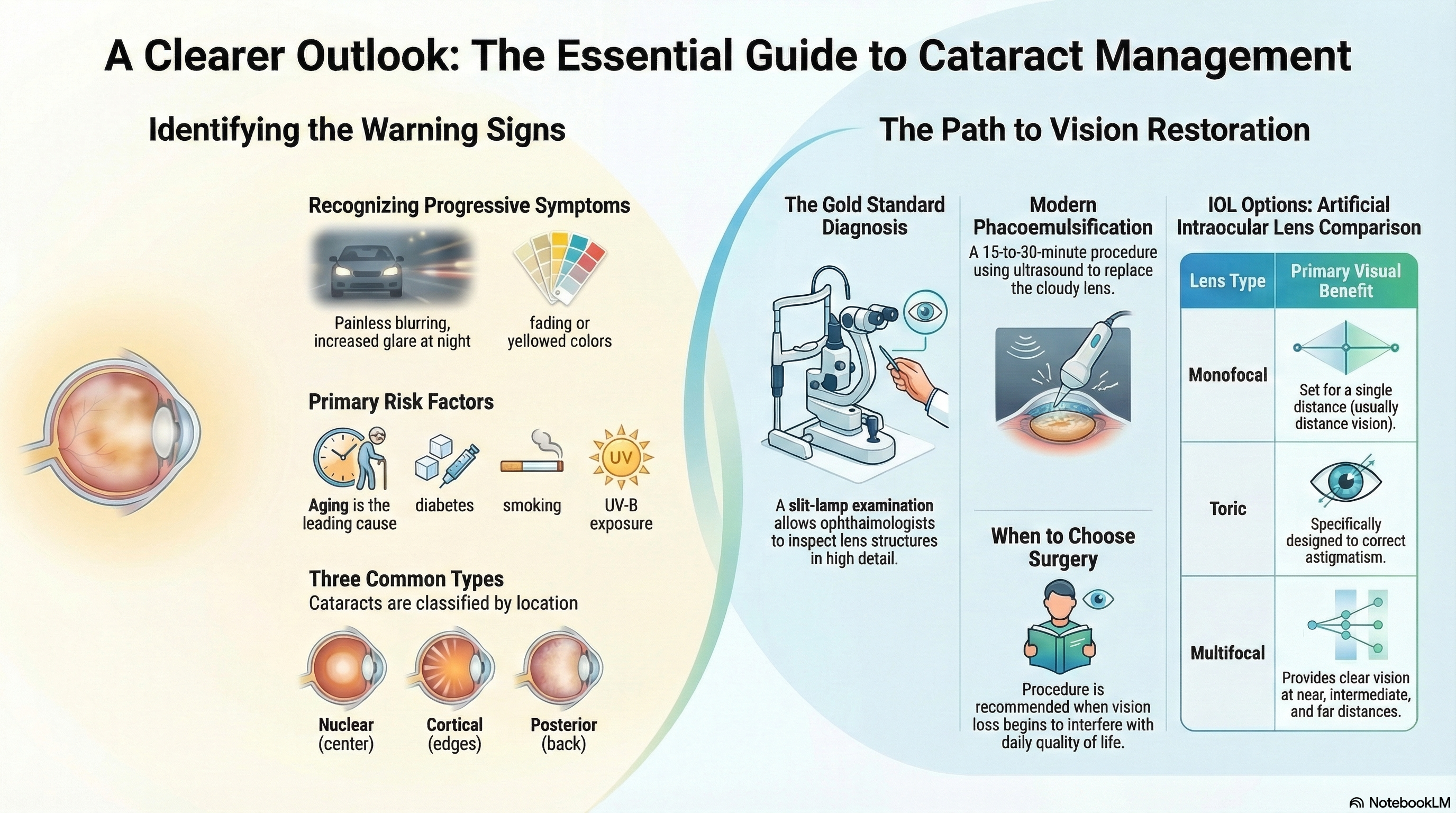
Inside the eye, the lens is made mostly of water and proteins called crystallins. As we age, these proteins can begin to clump together, turning a clear lens into a cloudy one. Cataracts are generally categorized by where they form in the lens:
-
Nuclear Cataract: Forms in the center of the lens and is often associated with aging. It can cause a temporary improvement in near vision (called "second sight") but eventually leads to yellowing and severe blurring.
-
Cortical Cataract: Characterized by white, spoke-like streaks that start on the edges of the lens and move toward the center. These often cause significant glare.
-
Posterior Subcapsular Cataract: Develops at the back of the lens. This type often progresses faster than others and affects reading vision and vision in bright light.
Causes of Cataract
While aging is the most common cause, several factors can contribute to the development of cataracts:
-
Aging and Oxidative Stress: The natural breakdown of proteins over time is the primary cause, affecting the vast majority of people over age 60.
-
Medical Conditions: Diabetes is a major contributor, increasing the risk of cataracts by three to four times.
-
Medications: Long-term use of corticosteroid medications (oral, inhaled, or drops).
-
Injury: Blunt or penetrating trauma to the eye can cause a "traumatic cataract" immediately or years later.
-
Environmental Factors: Cumulative exposure to UV-B radiation from sunlight.
-
Congenital Factors: Some children are born with cataracts due to genetics or infections during pregnancy, such as rubella.
Symptoms of Cataract
Cataracts usually develop slowly and are painless. You may not notice changes in your vision early on, but as the clouding progresses, you may experience:
-
Painless blurring or dimming of vision.
-
Increased sensitivity to glare and halos around lights, especially when driving at night.
-
Difficulty reading, even with bright light.
-
Fading or yellowing of colors, making things look "muddy."
-
Double vision in a single eye (monocular diplopia).
-
Frequent changes in your eyeglass or contact lens prescription.
Diagnosis of Cataract
A comprehensive eye exam is necessary to diagnose cataracts and rule out other eye conditions.
-
Visual Acuity Test: A standard eye chart test to measure how well you see at various distances.
-
Slit-Lamp Examination: The gold standard for diagnosis. An ophthalmologist uses a specialized microscope with a bright line of light to examine the structures at the front of your eye, including the lens, in high detail.
-
Dilated Fundus Exam: Using drops to widen the pupils, the doctor examines the retina and optic nerve to ensure no other issues are contributing to vision loss.
-
Tonometry: A test to measure the pressure inside the eye to check for glaucoma.
Treatment of Cataract
There are no eye drops, medications, or diets proven to reverse or prevent cataracts. The only effective treatment is surgical removal of the cloudy lens.
When to Have Surgery You do not need to wait for a cataract to become "ripe" or "mature." Modern surgery is typically recommended when the cataract begins to interfere with your quality of life—such as making it difficult to drive safely at night, read, or perform your job.
Modern Surgical Technique The standard procedure is Phacoemulsification. During this 15-to-30-minute procedure, a surgeon makes a tiny incision in the cornea, uses ultrasound waves to break the cloudy lens into small pieces, suctions them out, and replaces them with a clear artificial lens called an Intraocular Lens (IOL).
Lens Options
-
Monofocal: Set for one distance (usually distance vision); reading glasses are typically still needed.
-
Toric: Designed to correct astigmatism.
-
Multifocal/Trifocal: Designed to provide clear vision at multiple distances (near, intermediate, and far), reducing the need for glasses.
Prevention of Cataract
While you cannot entirely prevent age-related cataracts, you can take steps to delay their progression and protect your eye health:
-
UV Protection: Wear sunglasses that block 100% of UV-A and UV-B rays and a wide-brimmed hat when outdoors.
-
Quit Smoking: Smoking is a significant risk factor for lens clouding; quitting reduces your risk over time.
-
Manage Health Conditions: Keep blood sugar levels under strict control if you have diabetes, and manage high blood pressure.
-
Healthy Diet: A diet rich in leafy green vegetables and fruits high in antioxidants may provide slight protective benefits.
-
Regular Eye Exams: Annual or biennial exams help detect cataracts and other eye problems early.