


What is Alzheimer's Disease?
Alzheimer's disease is a progressive and irreversible brain disorder that slowly destroys memory, thinking skills, and the ability to perform simple daily tasks. It is the most common cause of dementia, accounting for roughly 60–70% of cases worldwide.
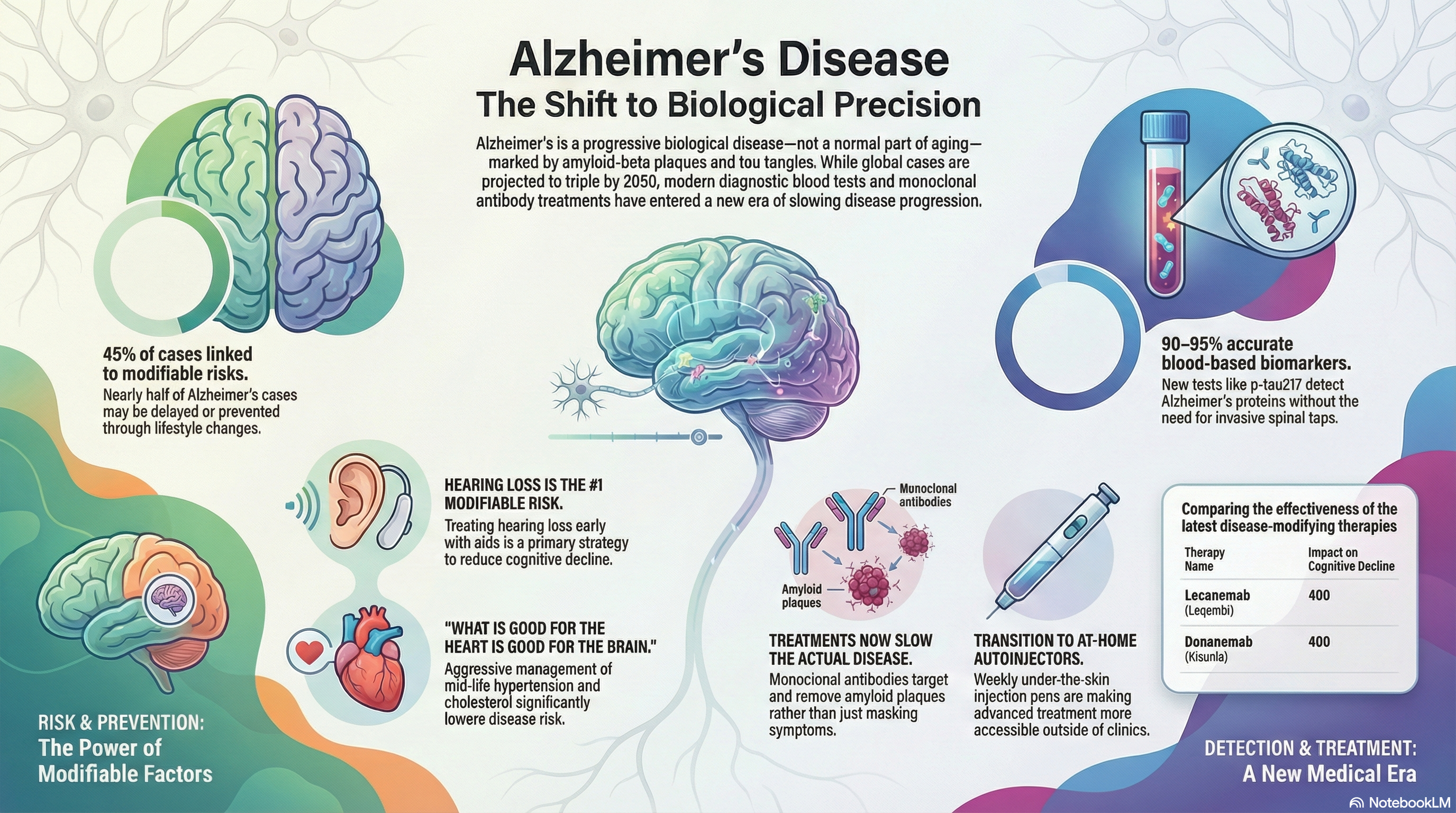
In the brain, the disease is characterized by two major abnormal structures: amyloid-beta plaques (clumps of protein between nerve cells) and tau tangles (twisted fibers inside the cells). These disrupt communication between neurons, eventually leading to cell death and brain shrinkage. As of 2026, it is estimated that over 55 million people live with dementia globally, a number projected to triple by 2050. It is crucial to remember that Alzheimer's is not a normal part of aging, but a biological disease process.
Causes of Alzheimer's Disease
While scientists do not fully understand the single "trigger" for Alzheimer's, it is recognized as a multifactorial disease caused by a combination of genetics, lifestyle, and environmental factors.
Genetic Factors
-
Late-Onset (Common): Most people develop symptoms after age 65. The APOE ε4 gene is the strongest genetic risk factor here; having one or two copies of this gene increases your risk significantly but does not guarantee you will develop the disease.
-
Early-Onset (Rare): Affects people in their 30s to mid-60s. This form is often linked to specific mutations in the APP, PSEN1, or PSEN2 genes, which can be passed down through families.
Environmental & Lifestyle Factors Recent research highlights that nearly 45% of cases may be linked to modifiable risks, including:
-
Untreated hearing loss (the #1 modifiable risk factor).
-
Cardiovascular issues like mid-life hypertension, diabetes, and high cholesterol.
-
Lifestyle habits such as smoking, excessive alcohol use, and physical inactivity.
-
Environmental exposures like air pollution and a history of traumatic brain injury.
Symptoms of Alzheimer's Disease
Symptoms typically progress slowly through three main stages: preclinical (no symptoms but brain changes are present), mild cognitive impairment, and dementia.
Early Signs
-
Short-term memory loss: Forgetting recently learned information or important dates.
-
Difficulty with familiar tasks: Struggling to follow a recipe or manage a monthly budget.
-
Confusion with time or place: Losing track of dates or forgetting how you got to a specific location.
Progression to Moderate and Severe Stages
-
Communication issues: Difficulty finding the right words or following a conversation.
-
Judgment and personality changes: Poor decision-making, withdrawal from social activities, and increased anxiety or aggression.
-
Advanced symptoms: In the final stages, individuals lose the ability to recognize loved ones, speak coherently, or perform basic physical functions like swallowing and walking.
Diagnosis of Alzheimer's Disease
The diagnosis of Alzheimer's has shifted from "wait and see" to biological precision. Doctors now aim to diagnose the disease years before significant symptoms appear.
Newest Diagnostic Tools (2025–2026)
-
Blood-Based Biomarkers: High-accuracy blood tests (like p-tau217) are now 90–95% accurate. These allow neurologists to detect amyloid and tau proteins without always needing more invasive tests.
-
Neuroimaging: MRI scans are used to detect brain shrinkage (atrophy), while PET scans can visualize the actual buildup of plaques and tangles.
-
Cognitive Testing: Standardized mental status tests are used to evaluate memory, orientation, and reasoning.
-
CSF Analysis: Spinal taps may still be used to measure protein levels in the cerebrospinal fluid for a definitive biological diagnosis.
Treatment of Alzheimer's Disease
We have entered a new era of treatment. For the first time, we have therapies that can slow the actual progression of the disease rather than just masking symptoms.
Disease-Modifying Therapies These are "monoclonal antibodies" that target and remove amyloid plaques from the brain.
-
Lecanemab (Leqembi): An IV infusion every two weeks that can slow cognitive decline by approximately 27% in early-stage patients.
-
Donanemab (Kisunla): A monthly infusion that has shown up to 35% slowing of decline. Notably, treatment can often stop once plaques are cleared.
-
Autoinjectors: In 2026, weekly under-the-skin injection pens (similar to GLP-1 pens) are becoming available, making treatment much more accessible at home.
Symptomatic & Supportive Care
-
Cognitive support: Medications like Donepezil and Memantine help improve communication between brain cells to manage memory loss temporarily.
-
Behavioral support: New medications like Brexpiprazole and AXS-05 are used to treat the agitation and aggression that can occur with dementia.
Prevention of Alzheimer's Disease
While there is no guaranteed way to prevent Alzheimer's, aggressive management of heart health and lifestyle can significantly reduce your risk.
The "Brain Health" Prescription Vascular Health: Controlling blood pressure and cholesterol is vital, as what is good for the heart is good for the brain.
Sensory Health: Treat hearing loss early with hearing aids; this has been shown to reduce cognitive decline.
Physical Activity: Aim for 150 minutes of moderate aerobic exercise plus strength training per week.
The MIND Diet: Focus on plant-based foods, berries, leafy greens, and healthy fats (like olive oil) while limiting red meat and sweets.
Mental & Social Engagement: Stay connected with friends and challenge your brain with new hobbies or skills to build "cognitive reserve."