


What is Acanthosis Nigricans?
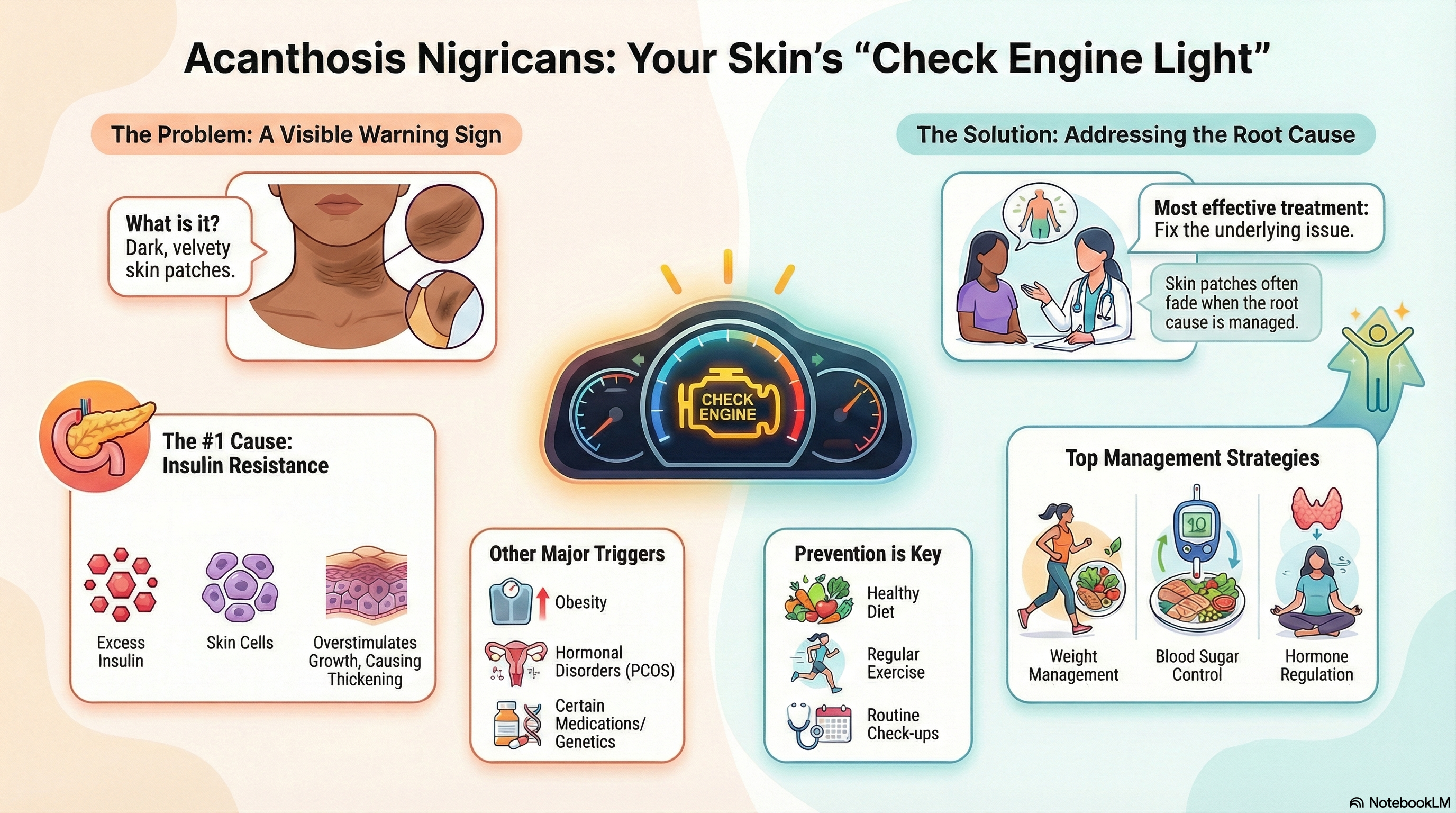
Acanthosis nigricans (AN) is a skin condition characterized by symmetric, dark, and "velvety" patches of skin. These patches typically appear in body folds and creases. While the skin changes themselves are generally harmless and not contagious, they serve as a critical "check engine light" for the body, often signaling an underlying systemic health issue.
In the United States, the condition is quite common, affecting approximately 20% of the population. It is most frequently found on the back of the neck, armpits, groin, elbows, and knuckles. While it can affect anyone, it is more prevalent in individuals with darker skin tones and is increasingly being recognized in children and adolescents.
Causes of Acanthosis Nigricans
The most common driver of acanthosis nigricans is insulin resistance. When your body has too much insulin circulating in the blood, it can overstimulate skin cells, causing them to reproduce rapidly and thicken.
Key causes and risk factors include:
-
Obesity and Insulin Resistance: Excess body weight is the primary risk factor. In fact, over 50% of adults who are twice their ideal body weight show signs of AN. It is strongly linked to prediabetes and Type 2 diabetes.
-
Hormonal Disorders: Conditions such as Polycystic Ovary Syndrome (PCOS)—which affects about 36.9% of women with AN—Cushing’s syndrome, and thyroid dysfunction can trigger these skin changes.
-
Medications: Certain drugs can cause AN as a side effect, including high-dose niacin, birth control pills, systemic corticosteroids (like prednisone), and growth hormone therapy.
-
Genetics: Some individuals inherit a faulty gene that causes the condition, often appearing during childhood or puberty.
-
Malignancy (Rare): In rare cases, especially if skin changes appear very suddenly and extensively, AN can be a "paraneoplastic syndrome," meaning it is a sign of an internal cancer, most commonly stomach cancer.
Symptoms of Acanthosis Nigricans
The symptoms of acanthosis nigricans usually develop slowly over months or years. If you notice a sudden onset, you should consult a doctor immediately.
Common signs include:
-
Hyperpigmentation: Darker patches of skin that are brown, gray, or black.
-
Velvety Texture: The affected skin feels soft or fuzzy to the touch, similar to velvet.
-
Hyperkeratosis (Thickening): The skin becomes noticeably thicker than the surrounding area.
-
Skin Tags: Small, fleshy growths often appear within or near the dark patches.
-
Itching or Odor: In some cases, the thickened skin may itch or develop a faint, unpleasant odor.
Diagnosis of Acanthosis Nigricans
A healthcare provider can usually diagnose acanthosis nigricans simply by looking at your skin during a physical exam. However, because the skin patches are a marker for other conditions, your doctor will likely perform a deeper investigation.
Evaluation steps often include:
-
Medical History: A review of your medications and family history of diabetes or hormonal issues.
-
Blood Tests: These are used to check blood glucose and insulin levels to screen for diabetes or metabolic syndrome.
-
Skin Biopsy: Rarely, a small sample of skin is removed and examined under a microscope to confirm the diagnosis if the appearance is unusual.
-
Imaging: If a malignancy is suspected, your doctor may order X-rays, ultrasounds, or CT scans to look for internal issues.
Treatment of Acanthosis Nigricans
The most effective way to treat acanthosis nigricans is to address the root cause. When the underlying condition is managed, the skin patches often fade or disappear.
Addressing the underlying condition:
-
Weight Management: For obesity-related AN, losing weight through diet and exercise is the most effective treatment.
-
Blood Sugar Control: Medications like metformin can help lower insulin levels and improve the skin's appearance.
-
Hormone Regulation: Treating PCOS or thyroid issues can resolve the skin changes.
-
Medication Adjustment: If a drug is causing the patches, your doctor may suggest an alternative.
Treating the skin directly (Cosmetic): If you are bothered by the appearance of the patches, topical treatments can help:
-
Prescription Creams: Retinoids (like tretinoin) or keratolytics (like salicylic acid) can help thin and lighten the skin.
-
Lightening Agents: Creams containing urea or alpha-hydroxy acids may improve color.
-
Procedures: Laser therapy or dermabrasion can be used to reduce the thickness of the skin in severe cases.
Prevention of Acanthosis Nigricans
Since most cases of acanthosis nigricans are related to lifestyle and metabolic health, prevention focuses on maintaining a healthy internal environment.
Prevention strategies include:
-
Healthy Diet: Focusing on whole foods and low-glycemic choices can prevent the insulin spikes that lead to skin thickening.
-
Regular Exercise: Staying active helps your body use insulin more efficiently, reducing the risk of insulin resistance.
-
Routine Check-ups: Regular blood work to monitor glucose and hormone levels can help catch metabolic changes before they manifest on the skin.
-
Monitoring Medications: Discuss the side effects of any new hormone treatments or steroids with your doctor.