

What is Acne?
Acne (Acne Vulgaris) is a chronic inflammatory skin condition that affects the hair follicles and oil-producing glands (sebaceous glands). While often dismissed as a temporary "rite of passage," it is actually a complex medical condition that affects approximately 85% of people between the ages of 12 and 24, as well as a significant number of adults.
The condition primarily appears on the face, chest, upper back, and shoulders—areas with the highest concentration of oil glands. It is important to know that acne is not caused by poor hygiene, and it is not contagious. It is, however, a condition that can profoundly affect self-esteem and quality of life, similar to other chronic illnesses like asthma or arthritis.
Causes of Acne
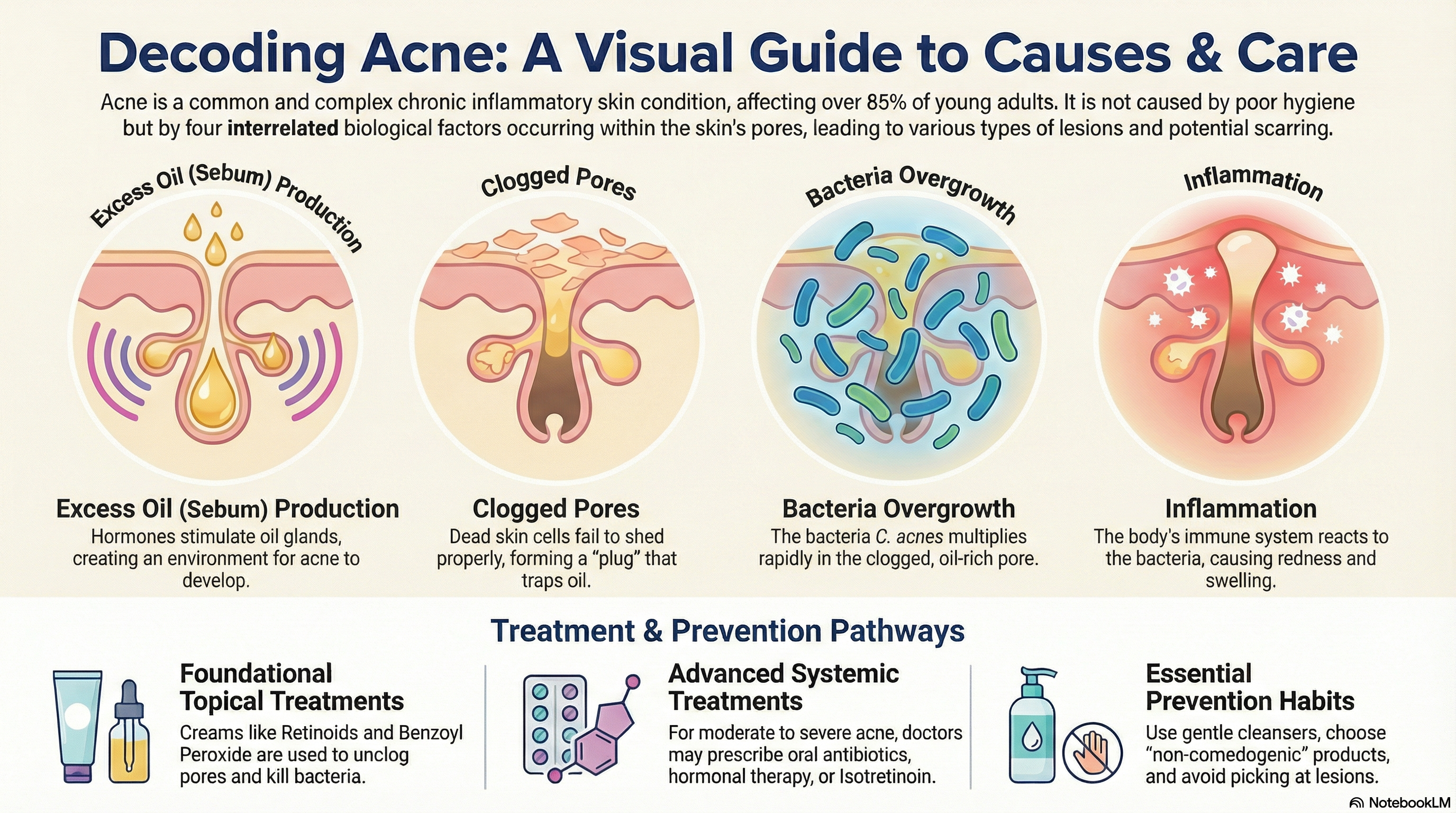
Acne is the result of four interrelated biological processes that happen deep within your pores.
The Four Main Factors
-
Excess Oil (Sebum) Production: Androgen hormones (present in everyone) stimulate oil glands to produce more sebum, especially during puberty, menstrual cycles, or periods of high stress.
-
Clogged Pores: Dead skin cells don't shed properly. Instead, they stick together and form a "plug" or comedone that traps oil inside the follicle.
-
Bacteria Overgrowth: A bacteria called Cutibacterium acnes (C. acnes) lives naturally on the skin but multiplies rapidly inside these clogged, oil-rich pores.
-
Inflammation: The body’s immune system reacts to the bacteria overgrowth and trapped oil, causing redness, swelling, and pus.
Other Contributors
-
Genetics: If your parents had severe acne, you are more likely to develop it.
-
Hormonal Shifts: Puberty, pregnancy, and conditions like Polycystic Ovary Syndrome (PCOS) can trigger flares.
-
Dietary Factors: Emerging evidence suggests that high-glycemic diets (sugary foods and processed carbs) and skim milk may worsen acne for some people.
-
External Friction: Helmets, phone screens, or tight clothing can trap sweat and bacteria against the skin.
Symptoms of Acne
Acne presents in several different forms, ranging from small, non-painful bumps to deep, painful lumps.
Non-Inflammatory Lesions
-
Blackheads (Open Comedones): Pores clogged with oil and skin cells that are open to the air. The "black" color is caused by the oil oxidizing, not by dirt.
-
Whiteheads (Closed Comedones): Small, flesh-colored bumps where the pore is clogged completely under the skin surface.
Inflammatory Lesions
-
Papules: Small, red, tender bumps that do not contain pus.
-
Pustules: The classic "pimple"—red at the base with a white or yellow center filled with pus.
-
Nodules and Cysts: Large, painful, solid or pus-filled lumps that sit deep under the skin. These carry the highest risk of permanent scarring.
Secondary Changes After an active breakout heals, it may leave behind post-inflammatory hyperpigmentation (dark spots), redness, or permanent "pitted" scars.
Diagnosis of Acne
A diagnosis is typically made through a physical examination by a healthcare provider or dermatologist. They will categorize your acne based on:
Visual Inspection The doctor will determine if your acne is "Comedonal" (mostly blackheads/whiteheads), "Inflammatory" (red bumps and pimples), or "Nodulocystic" (deep lumps). They will also assess the severity as mild, moderate, or severe.
Medical History You may be asked about your menstrual cycle, any medications you are taking (such as steroids or lithium), and your current skincare routine.
Further Testing In most cases, lab tests aren't needed. However, if a hormonal imbalance like PCOS is suspected, your doctor may order blood tests to check hormone levels. If the acne is resistant to standard treatments, they may swab a lesion to rule out other types of skin infections.
Treatment of Acne
The goal of treatment is to heal existing lesions, prevent new ones from forming, and stop scarring before it starts. Consistency is vital; most treatments take 6 to 12 weeks to show significant results.
Topical Treatments (Creams and Gels)
-
Retinoids (Adapalene, Tretinoin): These prevent pores from clogging by regulating how skin cells shed. They are the foundation of most acne routines.
-
Benzoyl Peroxide: An antibacterial agent that kills C. acnes and helps unclog pores.
-
Salicylic Acid and Azelaic Acid: These help reduce inflammation and keep pores clear.
Systemic Treatments (Oral Medications)
-
Antibiotics: Used short-term (3–6 months) to reduce bacteria and inflammation.
-
Hormonal Therapy: Birth control pills or spironolactone can be very effective for women whose acne flares with their menstrual cycle.
-
Isotretinoin: Often known by the brand name Accutane, this is the gold standard for severe, scarring acne that hasn't responded to other treatments. It is the only medication that targets all four causes of acne.
Clinical Procedures Dermatologists may use chemical peels, laser therapy, or "cortisone shots" (steroid injections) to quickly shrink large, painful cysts and reduce the risk of scarring.
Prevention of Acne
While you cannot always control the hormonal or genetic factors that cause acne, you can manage the environment of your skin to reduce the frequency and severity of breakouts.
Skincare Habits
-
Wash Gently: Cleanse your face no more than twice a day with a mild, fragrance-free cleanser. Over-washing or scrubbing can damage your skin barrier and increase inflammation.
-
Choose "Non-Comedogenic" Products: Only use makeup, sunscreens, and moisturizers labeled as non-comedogenic, meaning they are specifically formulated not to clog pores.
-
Hands Off: Avoid picking or squeezing pimples. This forces bacteria deeper into the skin and significantly increases the risk of permanent scars and dark spots.
Lifestyle Adjustments
-
Sun Protection: Daily sunscreen is essential, as many acne medications make your skin more sensitive to the sun, and UV rays can darken post-acne spots.
-
Post-Workout Hygiene: Shower and wash your face immediately after exercising to prevent sweat and bacteria from sitting on the skin.
-
Manage Stress: Since stress increases cortisol—which stimulates oil production—finding ways to manage stress can lead to clearer skin over time.