








What is an Ankle Sprain?
An ankle sprain is one of the most common musculoskeletal injuries, occurring when the ligaments that support the ankle are stretched or torn. Ligaments are the tough, fibrous tissues that connect bones to other bones. In a sprain, these tissues are pushed beyond their normal range of motion, usually because the foot has twisted or rolled awkwardly.
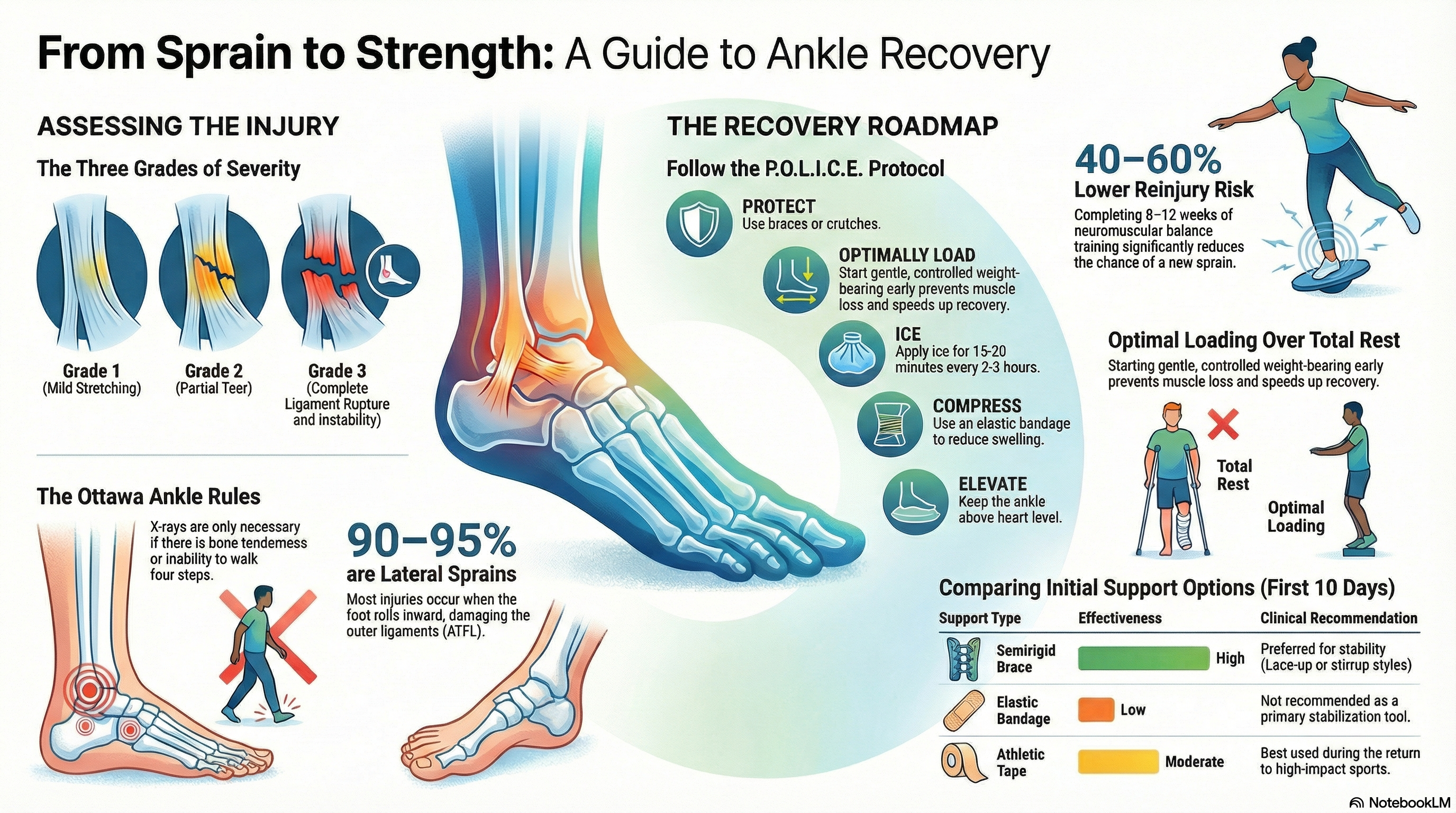
Most sprains (90–95%) are lateral ankle sprains, which occur when the foot rolls inward (inversion), damaging the ligaments on the outside of the ankle. The Anterior Talofibular Ligament (ATFL) is the most frequently injured structure. Less common are high ankle sprains, which involve the ligaments connecting the two leg bones (tibia and fibula) above the ankle joint, and medial sprains on the inside of the ankle.
Causes of Ankle Sprains
Ankle sprains happen when the joint is forced into an unnatural position. Common triggers include:
-
Sports Activities: Sudden pivoting, jumping, or "landing wrong" in sports like basketball, soccer, and volleyball.
-
Uneven Surfaces: Walking or running on cracked sidewalks, trails, or stepping into a hole.
-
Falls: Tripping or losing your balance, causing the ankle to twist under your body weight.
-
Previous Injury: The single greatest predictor of a sprain is having had one before, as previous injuries can leave the ligaments stretched or "loose."
Symptoms of Ankle Sprains
Symptoms vary based on the severity of the injury, which is usually categorized by a grading system:
-
Grade 1 (Mild): Slight stretching and microscopic tearing. You may have mild tenderness and swelling but can usually walk with minimal pain.
-
Grade 2 (Moderate): A partial tear of the ligament. You will likely experience moderate pain, swelling, and bruising. The ankle may feel somewhat unstable, and weight-bearing is difficult.
-
Grade 3 (Severe): A complete rupture of the ligament. This causes severe pain, significant swelling, and extensive bruising. You will likely be unable to put any weight on the foot, and the joint feels very unstable.
Common signs across all grades include an immediate "popping" sensation, rapid swelling, and bruising that typically appears within 24 to 48 hours.
Diagnosis of Ankle Sprains
A healthcare provider will typically diagnose a sprain through a physical exam, checking for tenderness, swelling, and the range of motion.
The Diagnostic Process:
-
Physical Testing: Doctors use the "Anterior Drawer" or "Talar Tilt" tests to check for ligament laxity. Diagnosis is often most accurate 4–7 days after the injury when initial swelling has subsided.
-
Ottawa Ankle Rules: These are a set of specific guidelines used to determine if an X-ray is necessary. X-rays are generally only required if there is bone tenderness at the tips of the ankle bones (malleoli) or if you are completely unable to take four steps.
-
Delayed Examination: Waiting a few days for a follow-up exam can help the doctor better determine the grade of the sprain once the acute pain has lessened.
Treatment of Ankle Sprains
Modern treatment focuses on functional rehabilitation rather than keeping the ankle completely still.
The P.O.L.I.C.E. Protocol (First 72 Hours):
-
Protection: Using a brace or crutches to prevent further injury.
-
Optimal Loading: Starting gentle, controlled weight-bearing as soon as pain allows. This helps prevent muscle loss and speeds up recovery.
-
Ice: Applying ice for 15–20 minutes every 2–3 hours to manage pain.
-
Compression: Using an elastic wrap to control swelling.
-
Elevation: Keeping the ankle above the level of your heart.
Pain Management and Rehabilitation:
-
Medication: Acetaminophen or NSAIDs (like ibuprofen) are effective for pain. Note that topical NSAID creams can also provide relief with fewer stomach side effects.
-
Bracing: Semirigid braces (lace-up or stirrup styles) are preferred over simple elastic bandages for the first 10 days.
-
Exercise Therapy: This is the most critical part of recovery. It includes range-of-motion stretches, followed by "proprioception" (balance) training, such as standing on one leg.
Prevention of Ankle Sprains
Because reinjury is so common, prevention is a vital part of the recovery process.
-
Neuromuscular Training: Engaging in balance and coordination exercises for 8–12 weeks after the injury can reduce the risk of a new sprain by 40–60%.
-
External Support: If you are returning to high-impact sports, wearing a lace-up brace or using athletic tape provides necessary stability while the ligaments continue to strengthen.
-
Proper Footwear: Avoid high heels on uneven ground and ensure your athletic shoes provide adequate lateral support.
-
Maintain Strength: Keeping the muscles around the ankle and lower leg strong helps "take the load" off the ligaments during sudden movements.
Treating an ankle sprain seriously from day one—and following through with balance exercises—is the best way to prevent chronic ankle instability and long-term arthritis.