

What is Anorexia Nervosa?
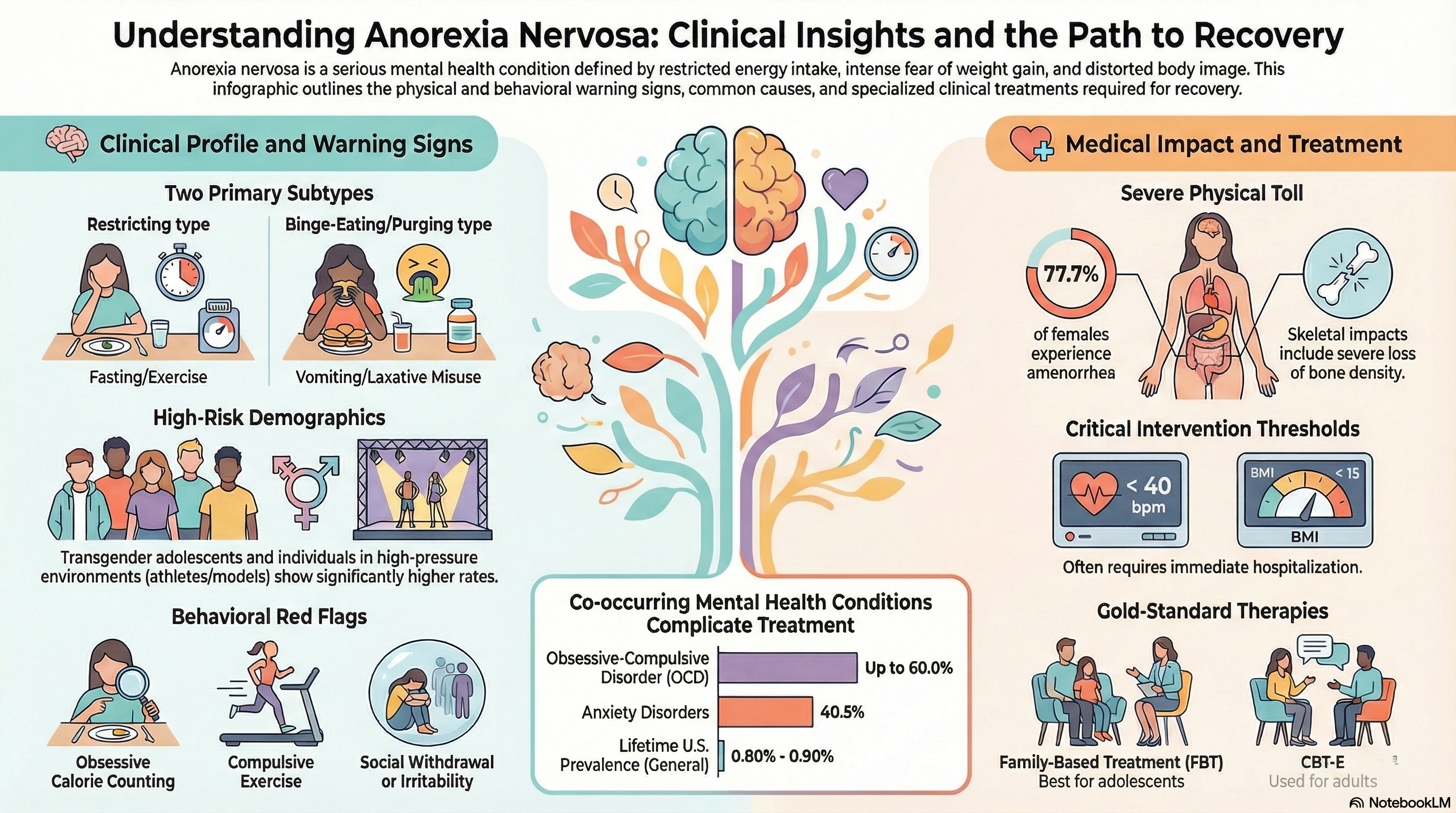
Anorexia nervosa is defined by three core diagnostic features. First, there is a restriction of energy intake relative to the body's requirements, leading to significantly low body weight. In adults, this typically means a Body Mass Index (BMI) of less than 18.5. Second, there is an intense fear of weight gain or persistent behavior that prevents weight gain, even when the person is already dangerously underweight. Finally, there is a disturbance in how the person experiences their body weight or shape, often involving a denial of the seriousness of their low weight.
There are two primary subtypes of the disorder:
-
Restricting Type: Weight loss is achieved primarily through dieting, fasting, or excessive exercise.
-
Binge-Eating/Purging Type: The individual regularly engages in binge eating or purging behaviors, such as self-induced vomiting or the misuse of laxatives and diuretics.
Causes of Anorexia Nervosa
Anorexia does not have a single cause but rather develops from a combination of biological, psychological, and environmental factors.
Biological and Genetic Factors Research indicates a strong genetic loading, meaning the disorder often runs in families. Brain chemistry also plays a role; differences in the parts of the brain that manage reward, impulse control, and executive function can contribute to the rigid, perfectionistic behaviors often seen in patients.
Psychological and Social Factors Certain personality traits, such as high levels of anxiety, perfectionism, and rigidity, are common risk factors. Childhood adversity or trauma can also trigger the onset of the disorder, usually during adolescence or young adulthood.
Sociocultural and Demographic Statistics While it affects all groups, some statistics highlight specific prevalence:
-
Prevalence: It affects approximately 0.80% to 0.90% of the U.S. population over a lifetime.
-
Racial Groups: Historically, white populations have shown higher reported rates, though this may partly reflect differences in healthcare access and diagnosis.
-
Gender and Identity: Transgender adolescents show higher rates of disordered eating than cisgender heterosexual females.
-
High-Pressure Environments: Rates are significantly higher among athletes, dancers, and models.
Symptoms of Anorexia Nervosa
The symptoms of anorexia manifest both behaviorally and physically. Because the body is in a state of starvation, every organ system is eventually affected.
Behavioral Warning Signs
-
Obsessive calorie counting or cutting food into tiny pieces.
-
Wearing baggy clothes to hide weight loss.
-
Exercising compulsively, even when injured, sick, or exhausted.
-
Social withdrawal and irritability.
Physical and Medical Symptoms
-
Cardiovascular: Bradycardia (heart rate <60 bpm), low blood pressure, and dangerous heart arrhythmias.
-
Endocrine: Loss of menstrual periods (amenorrhea) in 77.7% of females and growth hormone resistance.
-
Dermatologic: Growth of fine, downy hair on the body (lanugo), dry skin, and orange-tinted palms.
-
Skeletal: Severe loss of bone density (osteoporosis), which may lead to permanent fracture risks.
Diagnosis of Anorexia Nervosa
Diagnosis is made by a healthcare professional through a clinical interview, physical examination, and psychological assessment. There is no single "blood test" for anorexia, but labs are used to check for the effects of malnutrition.
The Diagnostic Process
-
Physical Assessment: Checking for BMI, heart rate, and temperature. A heart rate below 40 bpm or a BMI below 15 often requires immediate hospitalization.
-
Laboratory Testing: Screening for electrolyte imbalances (like low potassium), anemia, and leukopenia (low white blood cell count).
-
Differential Diagnosis: Doctors must rule out other medical conditions that cause weight loss, such as thyroid disorders, Crohn’s disease, or major depression.
-
Imaging: MRI scans may show "pseudo-atrophy" of the brain, a shrinking effect that is often partially reversible with weight restoration.
Treatment of Anorexia Nervosa
The primary goal of treatment is weight restoration, followed by psychological healing. Treatment is most effective when started early; an illness duration longer than five years significantly worsens the prognosis.
Evidence-Based Therapies
-
Adolescents: Family-Based Treatment (FBT), also known as the Maudsley Approach, is the gold standard. It involves parents playing a central role in refeeding their child.
-
Adults: Enhanced Cognitive Behavioral Therapy (CBT-E) and the Maudsley Model of Anorexia Nervosa Treatment for Adults (MANTRA) are the most supported outpatient treatments.
Medical Intervention No medication is FDA-approved specifically to cure anorexia. However, Olanzapine is sometimes used to assist with modest weight gain and to quiet obsessive thoughts about food. Hospitalization is necessary if the patient is medically unstable or at high risk for Refeeding Syndrome—a potentially fatal shift in electrolytes that can occur when food is reintroduced too quickly.
Prevention of Anorexia Nervosa
Prevention focuses on early education, reducing the emphasis on weight and shape, and building psychological resilience.
Protective Strategies
-
Early Intervention: Addressing ritualistic eating behaviors or sudden weight loss in children as soon as they appear.
-
Promoting Body Diversity: Challenging the social "thin ideal" and encouraging a focus on health and functionality over appearance.
-
Mental Health Support: Treating co-occurring conditions early, such as anxiety (affecting 40.5% of patients) or OCD (affecting up to 60%), can prevent these issues from manifesting as an eating disorder.
-
Screening: Regular screening in schools and pediatric offices can help identify at-risk individuals before the disorder becomes chronic.