






What is Anxiety?
Anxiety disorders are a group of related conditions characterized by excessive fear, worry, and behavioral disturbances. While "fear" is an emotional response to an immediate threat, "anxiety" is the anticipation of a future threat.
The most common types include:
-
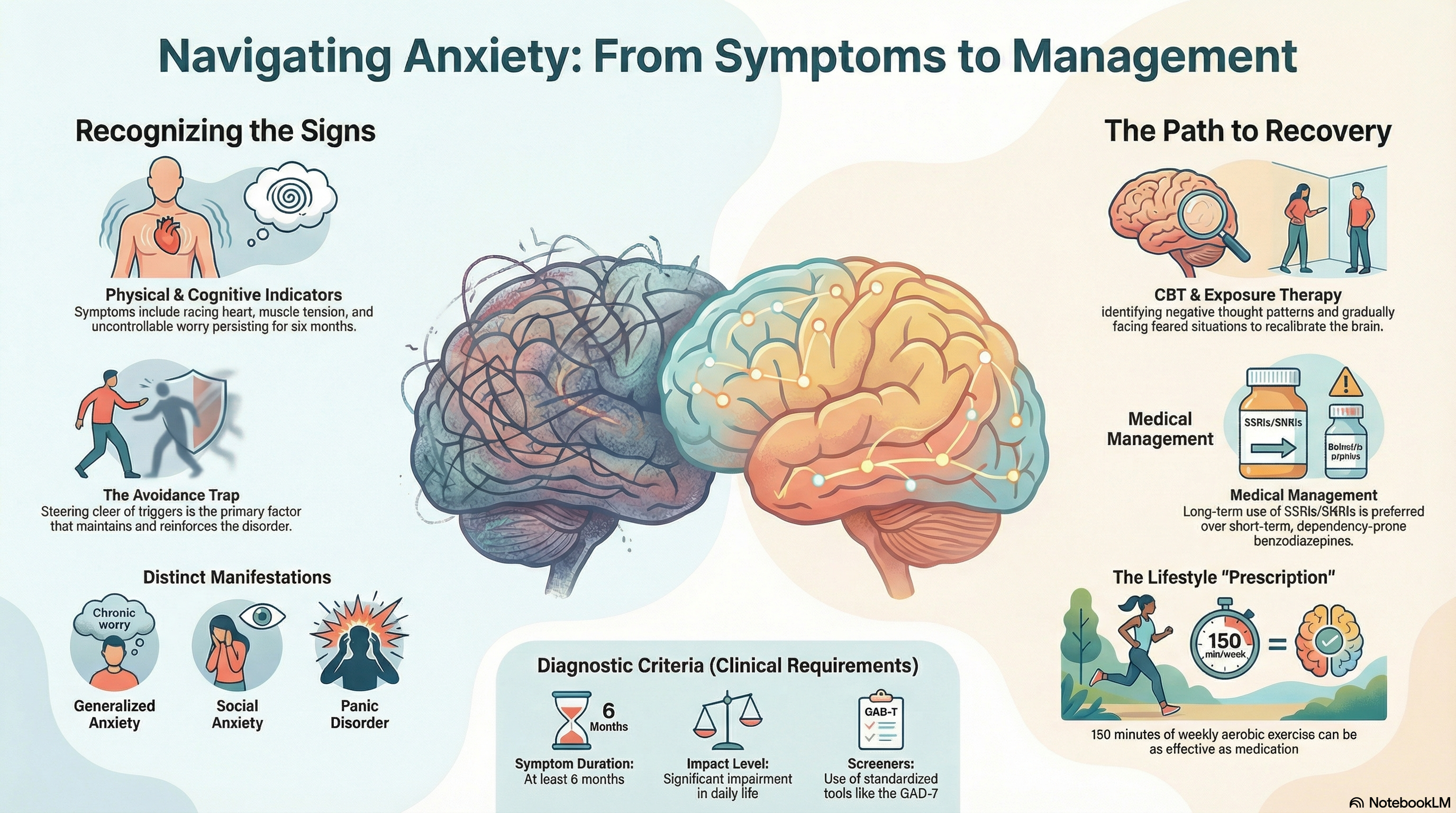
Generalized Anxiety Disorder (GAD): Chronic, excessive worry about various aspects of daily life, such as health, work, or family.
-
Social Anxiety Disorder: An intense fear of being judged or negatively evaluated in social situations.
-
Panic Disorder: Recurrent, unexpected panic attacks and a persistent fear of when the next one will occur.
-
Phobias: Intense fear of specific objects or situations, such as heights or flying.
Causes of Anxiety
Anxiety disorders do not have a single cause; rather, they result from a complex interplay of various factors.
Biological and Genetic Factors Anxiety often runs in families, suggesting a genetic predisposition. Research also points to differences in brain chemistry and the way certain brain regions, like the amygdala, process threats.
Environmental Triggers Stressful or traumatic life events, such as childhood adversity or major life changes, can calibrate the brain's "alarm system" to be overly sensitive.
Health and Lifestyle Factors Chronic medical conditions, the use of certain medications, and even excessive caffeine or alcohol consumption can worsen or trigger anxiety symptoms.
Symptoms of Anxiety
Anxiety manifests through a combination of physical, cognitive, and behavioral symptoms. These symptoms typically persist for six months or longer in clinical disorders.
Physical Symptoms (Autonomic Arousal)
-
Racing heart or palpitations.
-
Shortness of breath, chest tightness, or a "choking" feeling.
-
Dizziness, light-headedness, and muscle tension.
-
Digestive issues, such as nausea or "butterflies."
Cognitive and Emotional Symptoms
-
Excessive, uncontrollable worry or rumination.
-
Catastrophic thinking (fearing the worst possible outcome).
-
Irritability and a constant sense of impending doom.
-
Difficulty concentrating or your mind "going blank."
Behavioral Symptoms
-
Avoidance: Steering clear of situations that trigger anxiety (this is the primary factor that maintains the disorder).
-
Safety Behaviors: Relying on certain rituals or objects to feel safe (like always sitting near an exit).
-
Procrastination: Putting off tasks due to overwhelming worry.
Diagnosis of Anxiety
Diagnosis is a clinical process performed by a healthcare professional, such as a primary care doctor, psychiatrist, or psychologist.
Screening Tools Doctors often use standardized questionnaires, such as the GAD-7, to assess the severity and frequency of symptoms. Routine screening is especially recommended for women and girls aged 13 and older.
Diagnostic Evaluation The professional will perform a detailed interview to determine if your symptoms meet the criteria in the DSM-5 (the standard diagnostic manual). They will look for:
-
Symptoms persisting for at least 6 months.
-
Significant impairment in daily life.
-
The absence of other medical conditions (like thyroid issues) that could mimic anxiety.
Treatment of Anxiety
Anxiety is considered the most treatable of all mental health conditions. Most people find the best results through a combination of therapy and lifestyle changes.
Therapy (The Gold Standard) Cognitive Behavioral Therapy (CBT) is highly effective. It focuses on identifying negative thought patterns and gradually using Exposure Therapy to face feared situations, which helps "recalibrate" the brain's alarm system.
Medication
-
First-line: SSRIs (like Escitalopram or Sertraline) and SNRIs (like Venlafaxine) are the primary choices for long-term management.
-
Short-term: Medications like Propranolol can help with physical symptoms of performance anxiety.
-
Note on Benzodiazepines: Medications like Xanax or Ativan are generally only recommended for very short-term use (less than 2–4 weeks) due to the risk of dependence.
New and Emerging Options Recent advancements include Transcranial Magnetic Stimulation (TMS) and digital CBT apps that allow for evidence-based self-management.
Prevention of Anxiety
While you cannot always prevent the onset of an anxiety disorder, you can take evidence-based steps to manage your "alarm system" and reduce the risk of flares.
Lifestyle Prescriptions
-
Exercise: Regular aerobic exercise (150 minutes per week) has been shown to be as effective as medication for mild to moderate anxiety.
-
Sleep Hygiene: Prioritizing consistent, quality sleep is critical for emotional regulation.
-
Dietary Changes: Reducing caffeine and alcohol, which are known to mimic or trigger physical anxiety symptoms.
Resilience Building
-
Mindfulness: Practicing Mindfulness-Based Stress Reduction (MBSR) helps you stay grounded in the present moment.
-
Early Intervention: Seeking help when symptoms first begin to interfere with your life leads to significantly better long-term outcomes.
-
Social Support: Maintaining strong social connections acts as a buffer against chronic stress.