


What is Appendicitis?
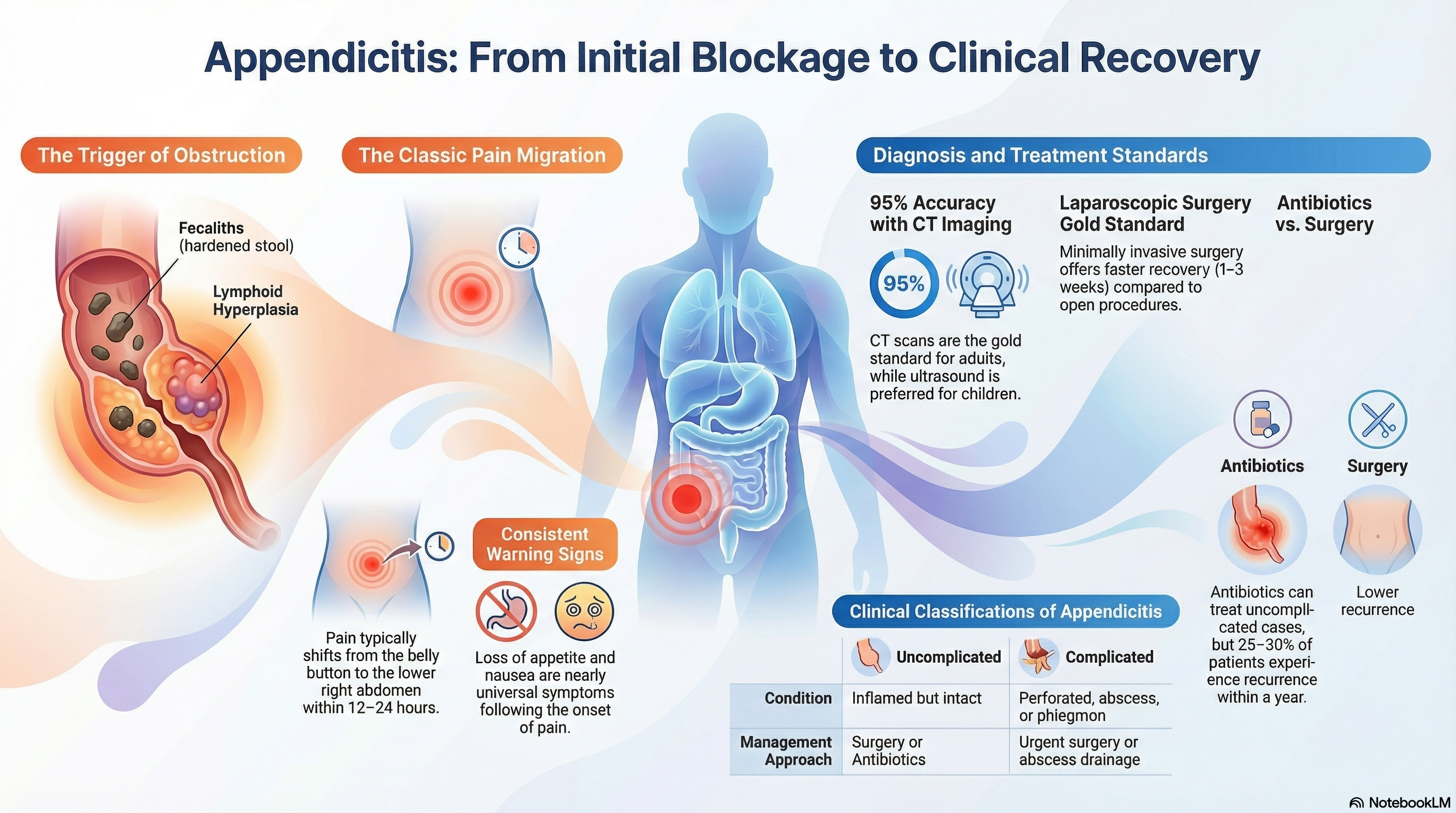
Appendicitis occurs when the opening of the appendix becomes blocked. This blockage causes the appendix to swell, become infected with bacteria, and fill with pus. If the pressure inside the appendix continues to rise, it can cut off blood flow to the organ’s walls, leading to tissue death (necrosis) and eventually a rupture.
Appendicitis is generally classified into two categories:
-
Uncomplicated: The appendix is inflamed but still intact.
-
Complicated: The appendix has burst (perforated) or has formed an abscess (a pocket of infection) or a phlegmon (an inflammatory mass).
Causes of Appendicitis
The primary trigger for appendicitis is an obstruction in the appendiceal lumen (the inside of the pouch). Several factors can cause this blockage:
-
Fecalith: Hardened pieces of stool that become trapped in the opening.
-
Lymphoid Hyperplasia: Swelling of the lymph tissue in the appendix wall, often occurring after a viral infection. This is the most common cause in children and young adults.
-
Infections and Parasites: Intestinal worms (like pinworms) or certain bacterial infections.
-
Tumors: In rare cases, especially in older adults, a small tumor may block the opening.
-
Foreign Bodies: Very rarely, swallowed objects can cause a physical blockage.
Symptoms of Appendicitis
While symptoms can vary depending on age and the position of the appendix, there is a "classic" pattern of pain that doctors look for.
-
Migrating Pain: Pain typically starts around the belly button (umbilicus) and moves to the lower right abdomen (McBurney’s point) within 12 to 24 hours.
-
Loss of Appetite: This is one of the most consistent signs; most patients do not feel like eating once the pain begins.
-
Digestive Upset: Nausea and vomiting frequently follow the onset of abdominal pain.
-
Low-Grade Fever: A temperature between 99.5°F and 101.3°F is common.
-
Pain Triggers: The pain often feels worse when coughing, sneezing, walking, or making sudden movements.
Atypical Symptoms by Group:
-
Children (<5 years): May experience high fever and diffuse pain across the entire stomach rather than in one spot.
-
Elderly: May have milder pain or no fever, leading to a higher risk of a delayed diagnosis.
-
Pregnant Women: The appendix is pushed higher during pregnancy, so pain may be felt in the upper right quadrant during the third trimester.
Diagnosis of Appendicitis
Because many conditions can mimic appendicitis (such as kidney stones, ovarian cysts, or pelvic inflammatory disease), doctors use a combination of tools to confirm the diagnosis.
-
Physical Exam: Doctors check for "rebound tenderness" (pain when pressure is released) and specific signs, such as the Rovsing sign (pain in the right side when the left side is pressed) or the Psoas sign (pain when extending the right hip).
-
Clinical Scoring: Systems like the Alvarado Score help doctors determine the likelihood of appendicitis based on symptoms and lab results.
-
Laboratory Tests: Blood tests often show a high white blood cell (WBC) count and elevated C-reactive protein (CRP), both of which indicate infection.
-
Imaging: * CT Scan: The gold standard for adults, offering over 95% accuracy.
-
Ultrasound: The preferred first-line test for children and pregnant women to avoid radiation.
-
MRI: Often used for pregnant patients if an ultrasound is inconclusive.
-
Treatment of Appendicitis
The standard treatment for appendicitis has traditionally been surgery, though certain cases can now be managed with medication alone.
-
Laparoscopic Appendectomy: This is the gold standard surgical approach. It uses small incisions and a camera, leading to less pain, smaller scars, and a faster recovery (often 1–3 weeks).
-
Open Appendectomy: A larger incision may be necessary if the appendix has ruptured or if there is extensive infection (peritonitis).
-
Antibiotic Therapy: For selected patients with "uncomplicated" appendicitis, antibiotics alone can be successful. However, about 25–30% of these patients experience a recurrence within one year.
-
Management of Abscesses: If the appendix has ruptured and formed a contained pocket of pus (abscess), doctors may use a needle to drain the infection and treat with antibiotics for several weeks before performing surgery.
Prevention of Appendicitis
There is no guaranteed way to prevent appendicitis, as many causes—like lymphoid tissue swelling or sudden blockages—are not within a person's control. However, data suggests some lifestyle factors may lower the risk:
-
High-Fiber Diet: Appendicitis appears to be less common in cultures where people eat diets high in fiber. Fiber helps soften stool and prevents the formation of fecaliths (hardened stool) that can block the appendix.
-
Hydration: Staying well-hydrated supports healthy digestion and regular bowel movements.
-
Prompt Treatment of Infections: Since viral and bacterial infections can cause the lymph tissue in the appendix to swell, managing overall health can potentially reduce this trigger.
-
Early Recognition: While you cannot prevent the initial inflammation, you can prevent the complications (like rupture and sepsis) by seeking emergency care as soon as symptoms appear.