

What is Cardiac Arrhythmia?
Arrhythmias are broadly classified by where they begin in the heart:
-
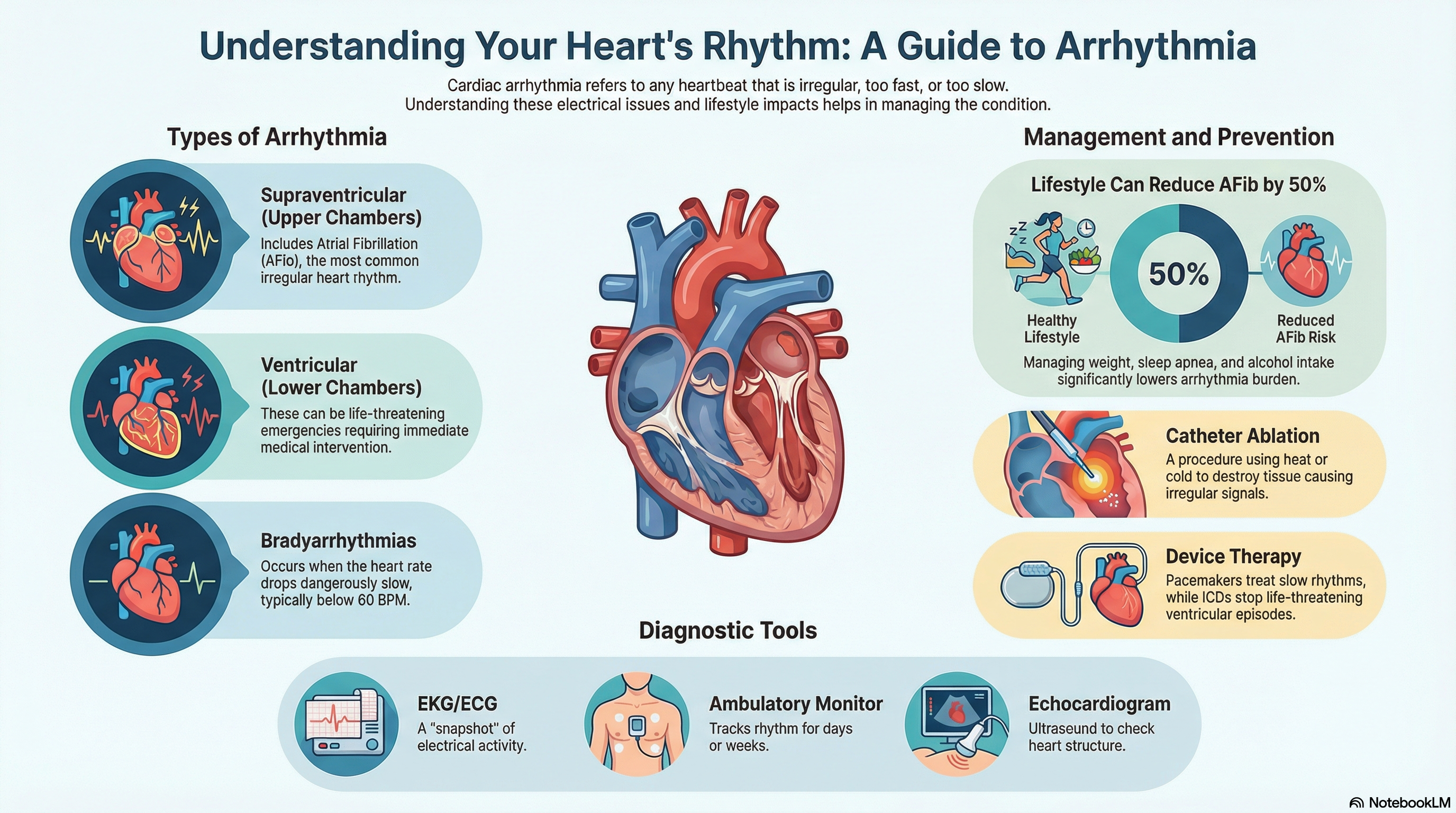
Supraventricular Arrhythmias: These start in the upper chambers (atria). The most common is Atrial Fibrillation (AFib), which causes a chaotic, irregular rhythm. Other types include Atrial Flutter and Supraventricular Tachycardia (SVT).
-
Ventricular Arrhythmias: These start in the lower chambers (ventricles). While occasional Premature Ventricular Contractions (PVCs) are common, sustained Ventricular Tachycardia (VT) or Ventricular Fibrillation (VF) are life-threatening emergencies that require immediate medical intervention.
-
Bradyarrhythmias: These occur when the heart rate is too slow (typically below 60 beats per minute), often due to "Sick Sinus Syndrome" or electrical blocks in the heart's conduction system.
Causes of Cardiac Arrhythmia
Arrhythmias can be caused by anything that scars or alters heart tissue, or changes the "wiring" of the heart’s electrical system.
-
Structural Heart Disease: A prior heart attack can leave behind fibrotic scar tissue that interferes with electrical signals. Heart failure and cardiomyopathy (enlarged heart) also provide a "substrate" for arrhythmias.
-
Lifestyle and Triggers: High blood pressure, diabetes, and sleep apnea are major independent risk factors. Stimulants like nicotine and caffeine, as well as excessive alcohol ("Holiday Heart Syndrome"), can trigger episodes.
-
Electrolyte Imbalances: Abnormal levels of potassium, magnesium, or calcium in the blood can disrupt the electrical stability of heart cells.
-
Genetics: Some people are born with "channelopathies"—genetic defects in the heart’s ion channels—such as Long QT Syndrome or Brugada Syndrome.
-
Other Medical Conditions: Thyroid disorders (both overactive and underactive) and the natural aging process (which causes tiny fibers to grow in the heart's electrical path) are common causes.
Symptoms of Cardiac Arrhythmia
Symptoms vary widely. Some people may have a serious arrhythmia with no symptoms at all, while others may feel significant distress from a benign rhythm.
-
Palpitations: Feelings of a racing, fluttering, skipping, or pounding heartbeat.
-
Lightheadedness and Dizziness: Feeling faint or actually losing consciousness (syncope).
-
Respiratory Issues: Shortness of breath (dyspnea) or extreme fatigue, especially during exercise.
-
Physical Discomfort: Chest pain or pressure.
-
Anxiety: A sense of impending doom or sudden nervousness.
It is important to note that the severity of your symptoms does not always correlate with how dangerous the arrhythmia is.
Diagnosis of Cardiac Arrhythmia
Because arrhythmias can be intermittent, doctors use several tools to "catch" the heart rhythm in the act.
-
Electrocardiogram (ECG/EKG): The cornerstone of diagnosis. It provides a "snapshot" of the heart's electrical activity.
-
Ambulatory Monitoring: If an ECG is normal but symptoms continue, you may wear a device for a longer period. This includes Holter monitors (24–48 hours), patch monitors (up to 14 days), or Implantable Loop Recorders that can monitor the heart for years.
-
Echocardiogram: An ultrasound used to assess the physical structure of your heart, its valves, and its pumping strength (ejection fraction).
-
Stress Testing: Monitoring the heart's rhythm while it is under the stress of exercise.
-
Electrophysiology Study (EPS): An invasive procedure where a doctor threads catheters into the heart to map its electrical system and pinpoint the exact origin of an arrhythmia.
Treatment of Cardiac Arrhythmia
Management strategies have advanced significantly, with a shift toward definitive cures for many conditions.
-
Lifestyle Modification: This is a powerful treatment. Weight loss, treating sleep apnea, and reducing alcohol can reduce the burden of AFib by up to 50%.
-
Medications:
-
Rate Control: Beta-blockers or calcium channel blockers to keep the heart rate in a safe range.
-
Rhythm Control: Antiarrhythmic drugs to help the heart stay in a normal rhythm.
-
Stroke Prevention: For AFib, blood thinners (anticoagulants) are often the highest priority to prevent clots.
-
-
Catheter Ablation: A procedure where a doctor uses cold (cryo) or heat (radiofrequency) energy to destroy the tiny area of heart tissue causing the irregular signal. This is now a first-line therapy for many types of SVT and AFib.
-
Device Therapy: * Pacemakers: Used primarily for slow heart rhythms.
-
Implantable Cardioverter-Defibrillators (ICD): Used to stop life-threatening ventricular arrhythmias by delivering a localized shock.
-
Prevention of Cardiac Arrhythmia
While you cannot change your genetics or age, most arrhythmias are preventable through aggressive management of cardiovascular health.
-
Blood Pressure Control: Maintaining a healthy blood pressure prevents the heart chambers from stretching and scarring.
-
Weight Management: Reducing body fat significantly lowers the risk of developing Atrial Fibrillation.
-
Manage Sleep Apnea: If you snore or stop breathing at night, using a CPAP machine can stop the cycle of heart irritation that leads to rhythm problems.
-
Limit Stimulants: Be mindful of your intake of caffeine, alcohol, and over-the-counter decongestants.
-
Regular Exercise: Moderate aerobic activity (about 150 minutes per week) keeps the heart muscle resilient, though extremely high-endurance athletes should be monitored for specific rhythm changes.