








What is Asbestosis?
Asbestosis is characterized by "interstitial pulmonary fibrosis"—a specific type of scarring that occurs deep within the lung tissue (the parenchyma). When asbestos fibers are inhaled, they can become lodged in the smallest airways, known as respiratory bronchioles, and the air sacs (alveoli).
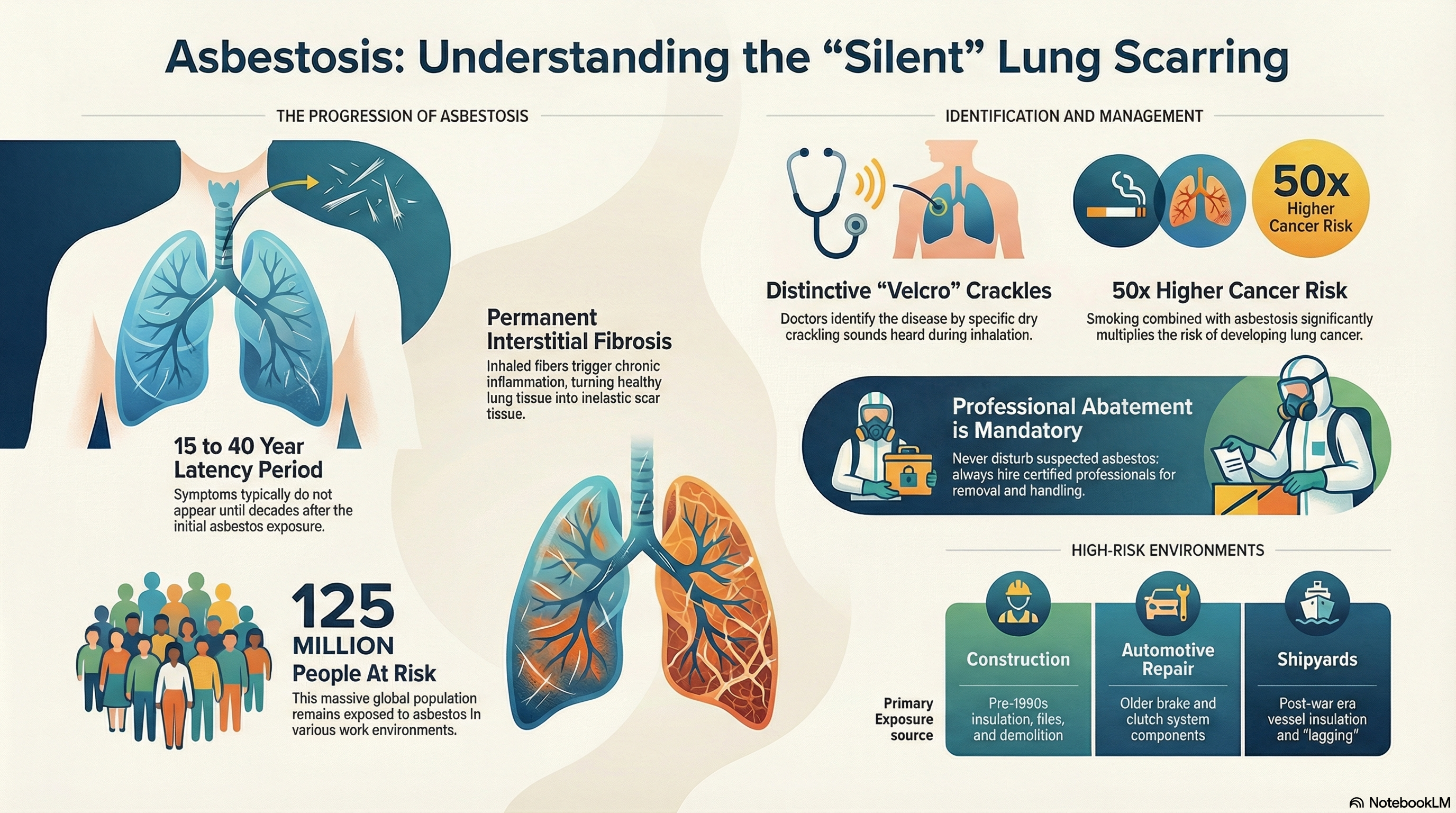
The body’s immune system attempts to dissolve these fibers, but because asbestos is a mineral and virtually indestructible, the attempt leads to chronic inflammation. Over time, this inflammation turns into permanent scar tissue. As the scarring spreads, the lungs lose their elasticity (compliance), making breathing increasingly difficult. Globally, asbestosis remains a major health burden, with approximately 125 million people still exposed to asbestos in work environments worldwide.
Causes of Asbestosis
Asbestosis is exclusively caused by the inhalation of asbestos fibers. Asbestos is a group of naturally occurring minerals that were once widely used in construction and manufacturing for their heat-resistant and insulating properties. All types of asbestos—white (chrysotile), brown (amosite), and blue (crocidolite)—can cause the disease, though blue asbestos is considered the most dangerous.
Because of the "latency period," symptoms typically do not appear until 15 to 40 years after the initial exposure. Historically, the disease most commonly affects workers in high-risk occupations, including:
-
Construction and Demolition: Workers in pre-1990s buildings.
-
Shipyards: Especially workers from the WWII and post-war eras.
-
Insulation and Textiles: Workers who handled "lagging" or asbestos fabrics.
-
Automotive Repair: Mechanics working on older brake and clutch systems.
-
Secondary Exposure: Family members exposed to asbestos dust brought home on a worker's clothing.
Symptoms of Asbestosis
Symptoms of asbestosis develop very gradually and may be so mild in the early stages that they go unnoticed. As the lung scarring progresses, the following symptoms become more prominent:
-
Shortness of Breath (Dyspnea): Initially only during physical exertion, but eventually occurring even while at rest.
-
Persistent Dry Cough: A nagging cough that does not produce phlegm.
-
Chest Tightness or Pain: A feeling of pressure in the thoracic region.
-
"Velcro" Crackles: A distinct sound heard by doctors through a stethoscope at the base of the lungs during inhalation.
-
Finger Clubbing: A widening and rounding of the tips of the fingers or toes, occurring in 40% to 70% of cases.
-
Fatigue and Weight Loss: Resulting from the increased physical effort required to breathe.
Diagnosis of Asbestosis
Diagnosis requires a comprehensive review of a patient's medical and work history, as the physical symptoms can mimic other types of lung disease.
-
Exposure History: Documentation of significant asbestos exposure (often 10–20 years of moderate to heavy exposure) and an appropriate latency period.
-
Imaging: High-resolution CT (HRCT) scans are more sensitive than standard X-rays. Doctors look for bilateral fibrosis in the lower lobes and "pleural plaques" (calcified areas on the lung lining), which are telltale signs of asbestos exposure.
-
Pulmonary Function Tests (PFTs): These tests measure how much air the lungs can hold and how well they move oxygen into the blood. Asbestosis typically shows a "restrictive" pattern.
-
Physical Exam: Identification of the characteristic dry crackles at the base of the lungs.
-
Biopsy: In rare cases, a microscopic examination of lung tissue may be performed to identify "asbestos bodies"—fibers coated with iron-rich proteins.
Treatment of Asbestosis
There is currently no cure for asbestosis, and the scarring of the lung tissue cannot be reversed. Management is focused on slowing the progression of the disease and relieving symptoms.
-
Smoking Cessation: This is the most critical step. Smoking combined with asbestosis multiplies the risk of developing lung cancer by nearly 50 times.
-
Oxygen Therapy: Portable or home oxygen may be prescribed if blood oxygen levels fall below a certain threshold.
-
Pulmonary Rehabilitation: Specialized exercise programs and breathing techniques to help maximize lung efficiency.
-
Vaccinations: Routine influenza and pneumococcal vaccines are essential to prevent respiratory infections, which can be much more severe for those with compromised lungs.
-
Complication Management: Treating related issues like pulmonary hypertension or right-sided heart failure (cor pulmonale).
Prevention of Asbestosis
Asbestosis is a 100% preventable disease. Because there is no curative therapy, prevention is the only definitive way to manage this condition.
-
Regulations and Bans: The primary method of prevention is the strict banning of asbestos and the regulation of its removal in older buildings.
-
Workplace Safety: For those working in environments where asbestos may still be present, the use of proper personal protective equipment (PPE), including specialized respirators, is mandatory.
-
Safe Handling: Never disturb materials suspected of containing asbestos (such as old pipe insulation or floor tiles) yourself. Always hire certified asbestos abatement professionals.
-
Monitoring: If you have a known history of exposure, regular check-ups with a respiratory specialist can help identify changes early and allow for prompt supportive care.