

What is Autism Spectrum Disorder?
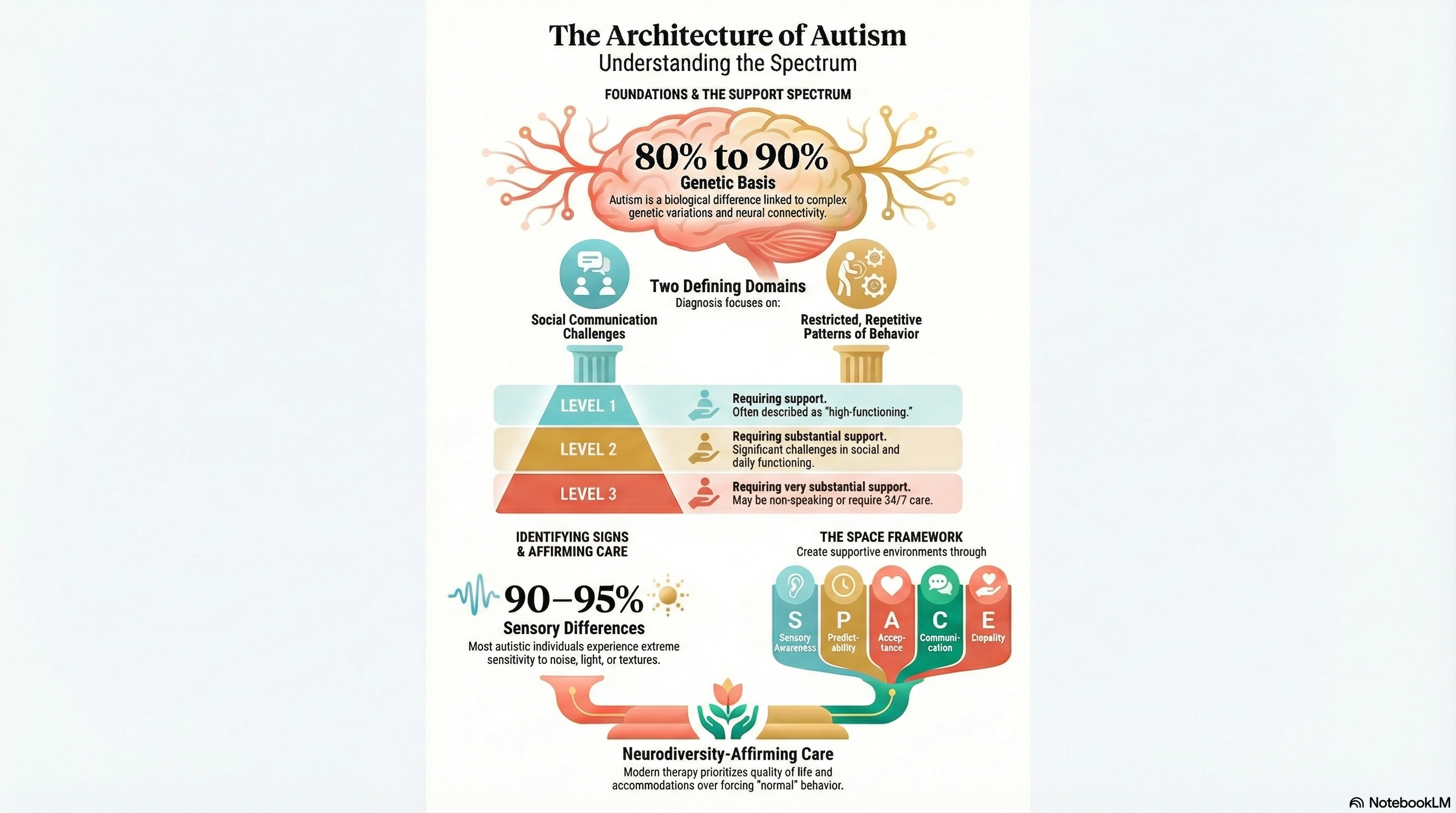
Autism is a lifelong neurological difference, not a disease. It is defined by two main "domains" of behavior:
-
Social Communication and Interaction: Challenges with back-and-forth conversation, difficulty reading non-verbal cues (like facial expressions or tone of voice), and differences in developing or maintaining relationships.
-
Restricted and Repetitive Patterns: This includes repetitive physical movements (like hand-flapping), a strong preference for routines, highly focused "special interests," and unique sensory processing.
Clinicians now use "Severity Levels" to describe the amount of support an individual needs:
-
Level 1: Requiring support (often called "high-functioning").
-
Level 2: Requiring substantial support.
-
Level 3: Requiring very substantial support (may be non-speaking or require 24/7 care).
Causes of Autism Spectrum Disorder
Autism is primarily biological and highly heritable. Current research indicates that 80% to 90% of the risk for autism is linked to genetics.
-
Genetics: Over 100 genes have been identified as having a strong association with autism. It is rarely caused by a single gene but rather a complex interplay of many genetic variations.
-
Brain Development: Atypical neural connectivity is often present, where some areas of the brain are "over-connected" while others are "under-connected." Brain volume differences are often visible in early childhood.
-
Environmental Interplay: Factors such as advanced parental age may contribute to the likelihood of autism, but these act in combination with genetic predispositions.
Important Note: Scientific consensus remains firm that vaccines do not cause autism. This has been confirmed by hundreds of large-scale studies worldwide.
Symptoms of Autism Spectrum Disorder
Symptoms typically appear in early childhood, though they may be "masked" or hidden in individuals with high IQs until social demands exceed their capacity to cope.
Social and Communication Signs
-
Literal Thinking: Difficulty understanding sarcasm, idioms, or "hints."
-
Social Reciprocity: Challenges with the "give-and-take" of social interaction or a preference for solitary activities.
-
Non-verbal Cues: Limited use of gestures (like pointing) or a lack of eye contact.
Behavioral and Sensory Signs
-
Sensory Processing: 90–95% of autistic people experience sensory differences, such as extreme sensitivity to loud noises, bright lights, or specific clothing textures.
-
Special Interests: Intense, narrow fascinations with specific topics, such as trains, computers, or historical dates.
-
Need for Predictability: Extreme distress caused by small changes in routine or environment.
Diagnosis of Autism Spectrum Disorder
Diagnosis is based entirely on behavioral observation and developmental history, as there are currently no medical "biomarkers" or blood tests for autism.
-
Screening: The American Academy of Pediatrics recommends formal screening for all children at 18 and 24 months.
-
The Gold Standard: A comprehensive evaluation usually involves a multidisciplinary team (pediatricians, psychologists, and speech therapists) using tools like the ADOS-2 (Autism Diagnostic Observation Schedule).
-
Adult Diagnosis: Many adults seek diagnosis after experiencing "autistic burnout"—a state of physical and mental exhaustion caused by years of "masking" or pretending to be neurotypical to fit in.
Treatment of Autism Spectrum Disorder
Management is focused on supporting the individual's quality of life and helping them navigate a world not always designed for their neurotype.
-
Behavioral Interventions: For young children, naturalistic models like the Early Start Denver Model are used to improve language and social engagement.
-
Speech and Occupational Therapy: These help with social pragmatics (the "rules" of conversation), fine motor skills, and sensory integration.
-
Pharmacotherapy: There is no medication to "treat" autism itself. However, medications can be very effective for co-occurring conditions. For example, Melatonin is used for sleep disorders (affecting 50-80% of autistic people), and Risperidone may be used for severe irritability or aggression.
-
Neurodiversity-Affirming Care: Modern therapy focuses on acceptance rather than "compliance." The goal is to provide accommodations—like noise-canceling headphones or predictable schedules—rather than forcing the individual to act "normal."
Prevention of Autism Spectrum Disorder
Because autism is a genetic, structural difference in how the brain is built, it cannot be prevented. However, we can prevent the secondary challenges that often accompany it.
-
Preventing Mental Health Crises: Autistic individuals have significantly higher rates of anxiety (40–60%) and depression. Early diagnosis and acceptance can prevent the "burnout" and low self-esteem that lead to these conditions.
-
Managing Co-occurring Health Issues: Since up to 30% of autistic people also have epilepsy, and many suffer from gastrointestinal issues, proactive medical monitoring is essential.
-
Supportive Environments: Using the SPACE framework (Sensory, Predictability, Acceptance, Communication, Empathy) in schools and workplaces can prevent social isolation and help autistic people leverage their unique strengths, such as exceptional attention to detail and pattern recognition.