







What is Bell's Palsy?
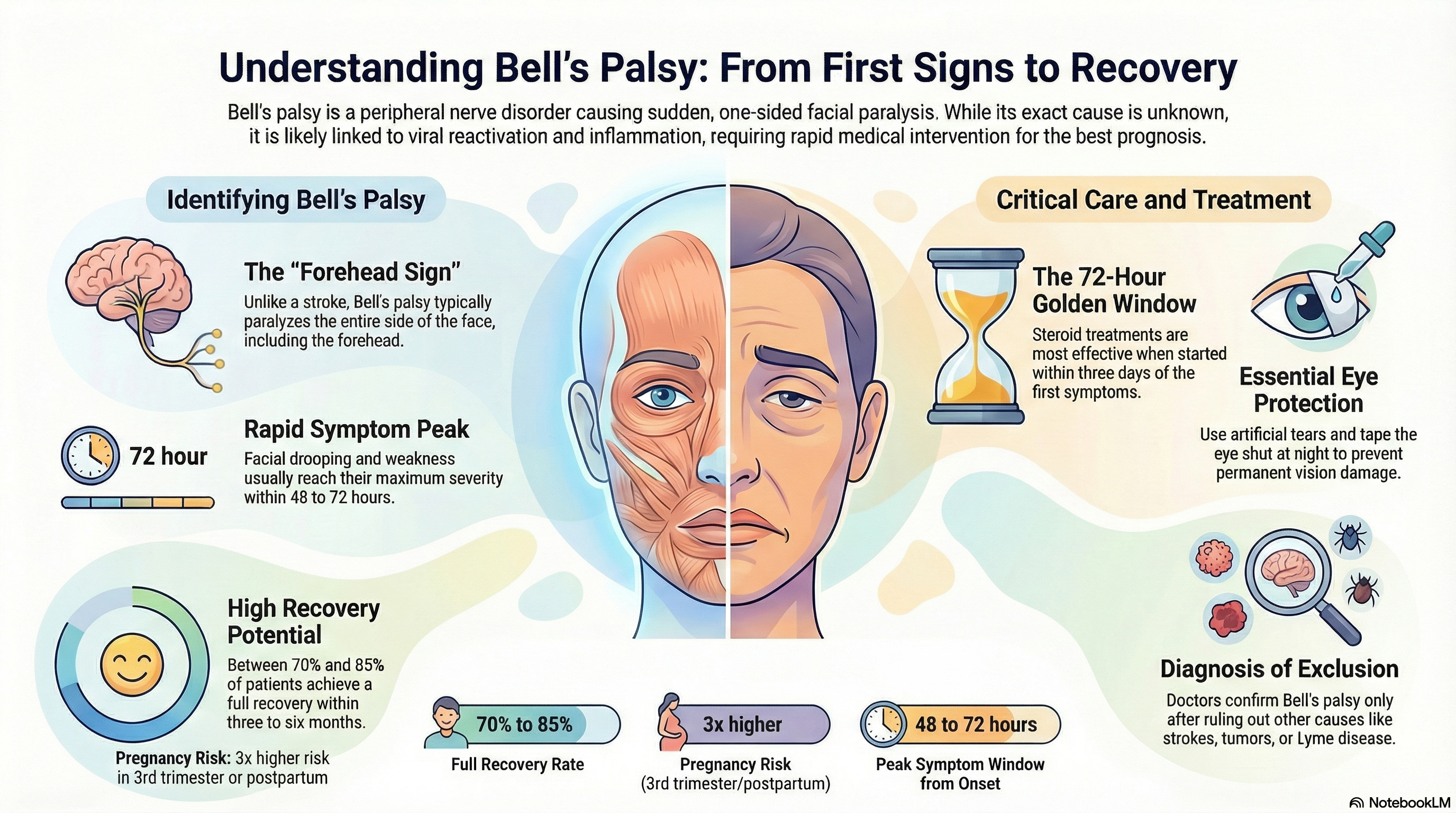
Bell's palsy is an "idiopathic" condition, meaning it occurs without a single, definitive known cause. It is a peripheral nerve disorder, which distinguishes it from a stroke (a central nervous system issue). A hallmark of Bell's palsy is that it affects the entire side of the face, including the forehead. If a person has facial weakness but can still wrinkle their forehead or move their eyebrow, the cause may be central (like a stroke) rather than Bell's palsy.
Most cases affect only one side of the face. Symptoms typically reach their peak within 48 to 72 hours. While it can be distressing, the prognosis is highly favorable: approximately 70% to 85% of patients recover completely within three to six months, even without medical intervention.
Causes of Bell's Palsy
Although the exact cause remains officially unknown, medical research strongly suggests that Bell's palsy is triggered by a viral infection that causes the facial nerve to swell.
-
Viral Reactivation: The leading theory is the reactivation of a dormant virus, most commonly Herpes Simplex Virus Type 1 (HSV-1), which causes cold sores, or the Varicella-Zoster Virus, which causes shingles and chickenpox.
-
Inflammation: As the virus reawakens, it causes the facial nerve to inflame. Because the nerve passes through a very tight bony canal, even minor swelling can cause the nerve to be "pinched," cutting off its blood supply and its ability to send signals to the muscles.
-
Common Triggers and Risk Factors:
-
Pregnancy: Women in their third trimester or first week postpartum have a 3x higher risk.
-
Diabetes and Hypertension: These conditions can affect blood flow to the nerves.
-
Recent Respiratory Infection: Many patients report having a cold or flu shortly before the paralysis begins.
-
Stress and Immune Suppression: Physical or emotional stress can weaken the immune system, allowing dormant viruses to reactivate.
-
Symptoms of Bell's Palsy
Symptoms usually appear rapidly, sometimes within just a few hours. Because the facial nerve also carries signals for taste and sound, the symptoms can extend beyond muscle weakness.
-
Facial Drooping: One side of the face may sag, the mouth may droop, and the nasolabial fold (the line from the nose to the corner of the mouth) may disappear.
-
Inability to Close the Eye: This is the most critical symptom, as it can lead to severe dry eye and potential permanent vision damage if the cornea is not protected.
-
Forehead Paralysis: An inability to raise the eyebrow or wrinkle the forehead on the affected side.
-
Pain: Many patients experience pain behind or around the ear a day or two before the weakness begins.
-
Altered Senses: Sounds may seem abnormally loud in the affected ear (hyperacusis), and there may be a loss of taste on the front portion of the tongue.
-
Tearing and Drooling: You may experience excessive tearing or a dry eye, along with difficulty controlling saliva.
Diagnosis of Bell's Palsy
Bell's palsy is known as a "diagnosis of exclusion." This means a doctor will first rule out other possible causes of facial weakness before confirming Bell's palsy.
-
Clinical Examination: A doctor will ask you to move your facial muscles—closing your eyes, lifting your brow, showing your teeth, and puckering your lips.
-
Identifying the "Forehead Sign": The doctor will specifically check if your forehead is involved. If the forehead muscles still work, they will investigate for a stroke or brain tumor.
-
Laboratory and Imaging: These are not usually required for a typical case. However, if the weakness does not improve after three months or if the symptoms are atypical, an MRI or blood tests for conditions like Lyme disease may be ordered.
-
Red Flags: Doctors will look for "vesicles" (small blisters) in the ear or on the tongue, which would indicate Ramsay Hunt syndrome, a more severe viral infection requiring different treatment.
Treatment of Bell's Palsy
Early treatment is the key to ensuring the highest possible chance of a full recovery.
-
Oral Corticosteroids: This is the gold standard of treatment. Medications like prednisone significantly reduce nerve swelling. They are most effective when started within 72 hours of the first symptoms.
-
Eye Protection: This is the most vital part of home care. Because you cannot blink, your eye is at risk of drying out or being scratched.
-
Use artificial tears every 1–2 hours during the day.
-
Apply a lubricating ointment and tape the eye shut at night.
-
-
Antiviral Medications: In severe cases or when a specific viral cause is suspected, antivirals like valacyclovir may be added to the steroid regimen, though they are not usually effective when used alone.
-
Physical Therapy: For those with lingering weakness after several months, specialized facial exercises can help retrain the muscles and prevent "synkinesis" (involuntary muscle twitching during facial expressions).
Prevention of Bell's Palsy
Because Bell's palsy is often linked to the reactivation of common viruses, there is no guaranteed way to prevent it. However, maintaining a healthy immune system may reduce the likelihood of viral flare-ups.
-
Manage Stress: Chronic stress and lack of sleep are known to suppress the immune system.
-
Chronic Condition Management: Keeping diabetes and hypertension under control helps maintain the health of your blood vessels and nerves.
-
Protect Against Cold: While "catching a draft" is an old theory, sudden exposure to extreme cold or wind has been associated with the onset of symptoms in some individuals.
-
Early Intervention: While you cannot prevent the initial onset, you can "prevent" permanent damage by seeking medical attention immediately at the first sign of facial drooping to start steroid therapy.