








What is Bursitis?
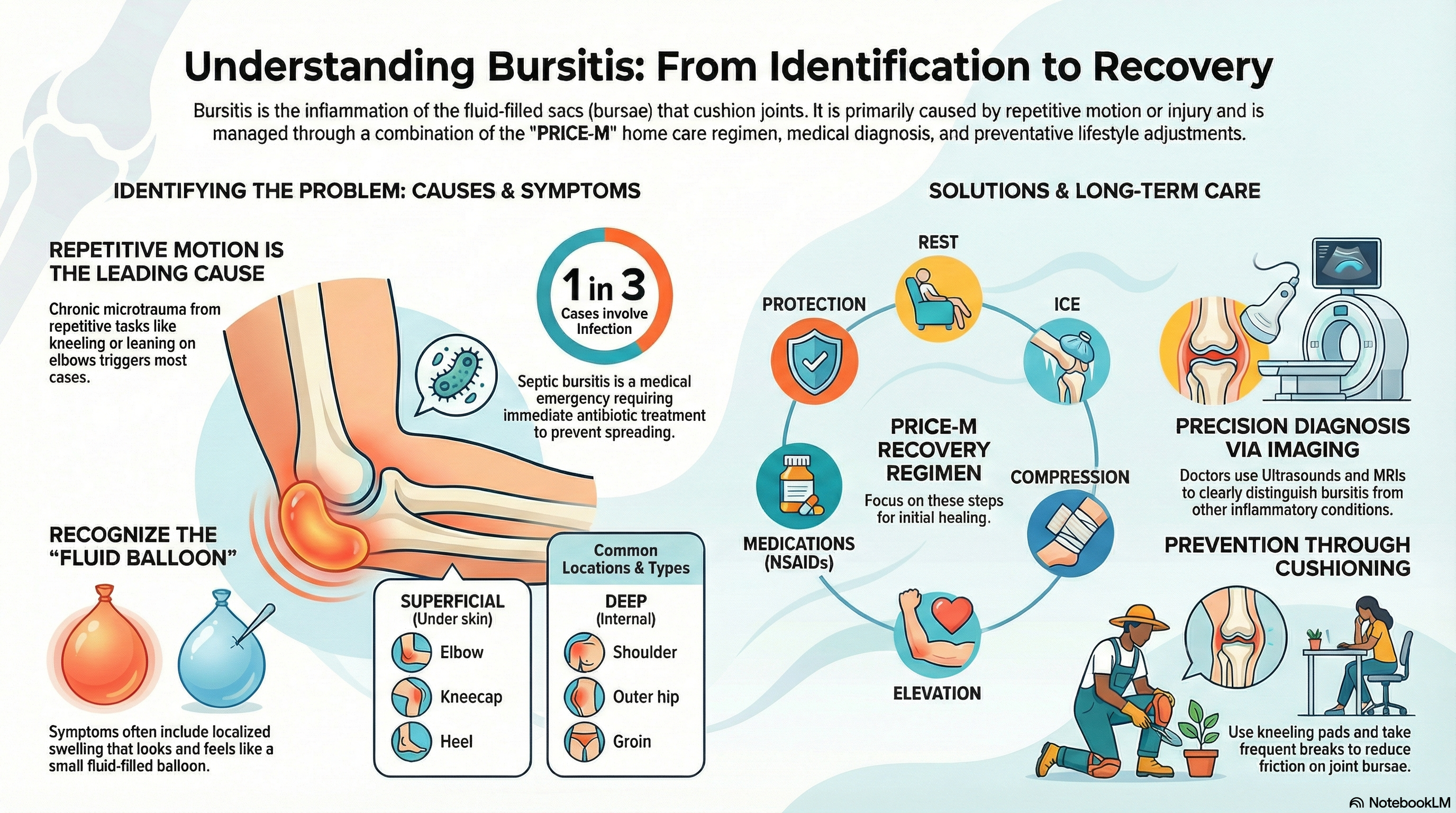
Bursitis is the inflammation of one or more of these cushioning sacs. It is classified into two main types based on where it occurs:
-
Superficial Bursitis: Affects bursae just under the skin. Common examples include the Olecranon (elbow), Prepatellar (kneecap), and Retrocalcaneal (heel).
-
Deep Bursitis: Affects bursae deeper within the body, such as in the Subacromial (shoulder), Trochanteric (outer hip), or Iliopsoas (groin) areas.
Causes of Bursitis
The cause of bursitis is usually related to how a joint is used or a sudden injury to the area.
-
Repetitive Motion (Most Common): Chronic microtrauma from repetitive activities is the leading cause. This includes frequent kneeling ("Housemaid’s knee"), leaning on elbows ("Student’s elbow"), or repetitive throwing in sports.
-
Direct Trauma: A sudden blow or fall onto a joint can cause the bursa to fill with blood or fluid.
-
Infection (Septic Bursitis): Bacteria, most commonly Staphylococcus aureus, can enter the bursa through a small cut or scrape. This accounts for about one-third of all cases and is a medical emergency.
-
Inflammatory Conditions: Systemic diseases such as gout, rheumatoid arthritis, and pseudogout can trigger inflammation in the bursae.
Symptoms of Bursitis
Bursitis symptoms are typically localized to the affected joint and may include:
-
Pain: A dull ache or tenderness that worsens when you move the joint or apply pressure.
-
Visible Swelling: Especially in superficial areas like the elbow or knee, the bursa may look like a small, fluid-filled "balloon."
-
Stiffness: A decreased range of motion in the joint.
Warning Signs of Infection (Septic Bursitis): If the skin over the bursa is very red, hot to the touch, or if you develop a fever (>37.8°C) and chills, see a doctor immediately. Septic bursitis requires prompt antibiotic treatment to prevent the infection from spreading.
Diagnosis of Bursitis
Doctors usually diagnose bursitis through a physical exam and a review of your daily activities.
-
Physical Exam: Your doctor will check for localized swelling, warmth, and tenderness.
-
Imaging: * Ultrasound: This is often the first choice for diagnosis as it clearly shows fluid collections and can distinguish bursitis from other issues like cellulitis.
-
MRI: Used for deep bursae in the shoulder or hip that are harder to see with ultrasound.
-
-
Aspiration (Fluid Analysis): If your doctor suspects an infection or gout, they may use a needle to draw a small sample of fluid from the bursa. This fluid is tested for bacteria, white blood cell count, and crystals.
Treatment of Bursitis
Most cases of non-infectious bursitis respond well to conservative care at home.
The "PRICE-M" Regimen
-
Protection: Avoid the activity that caused the irritation.
-
Rest: Give the joint time to heal.
-
Ice: Apply ice for 15–20 minutes several times a day for the first 48 hours to reduce swelling.
-
Compression: An elastic bandage can help control the fluid buildup.
-
Elevation: Keeping the joint above your heart helps fluid drain away.
-
Medications: Over-the-counter NSAIDs (like ibuprofen or naproxen) are the first line for pain and inflammation.
Advanced Treatments
-
Corticosteroid Injections: If pain persists after 4–6 weeks, an injection can provide rapid relief.
-
Antibiotics: Necessary for septic bursitis. Most patients can take oral antibiotics, but severe infections may require IV treatment.
-
Surgery: A "bursectomy" (surgical removal of the bursa) is rare and only used for cases that keep returning or do not respond to any other treatment.
Prevention of Bursitis
The key to preventing bursitis is to reduce the friction and pressure on your joints.
-
Use Cushioning: Always use kneeling pads or a cushioned seat if your work or hobbies require prolonged pressure on your knees or sitting bones.
-
Take Breaks: Avoid repetitive tasks for long periods; vary your movements to give specific joints a rest.
-
Strengthen Your Muscles: Strengthening the muscles around your joints (especially the rotator cuff for shoulders and gluteal muscles for hips) helps stabilize the joint and reduces the load on the bursae.
-
Proper Mechanics: If you are an athlete or a laborer, ensure you are using the correct form and technique to avoid unnecessary strain.
-
Warm-up: Always warm up and stretch before engaging in strenuous physical activity.