





What is Cervical Cancer?
Cervical cancer occurs when the cells of the cervix begin to grow uncontrollably. Most cervical cancers start in the "transformation zone," the area where the two main types of cells in the cervix meet.
There are two primary types of cervical cancer:
-
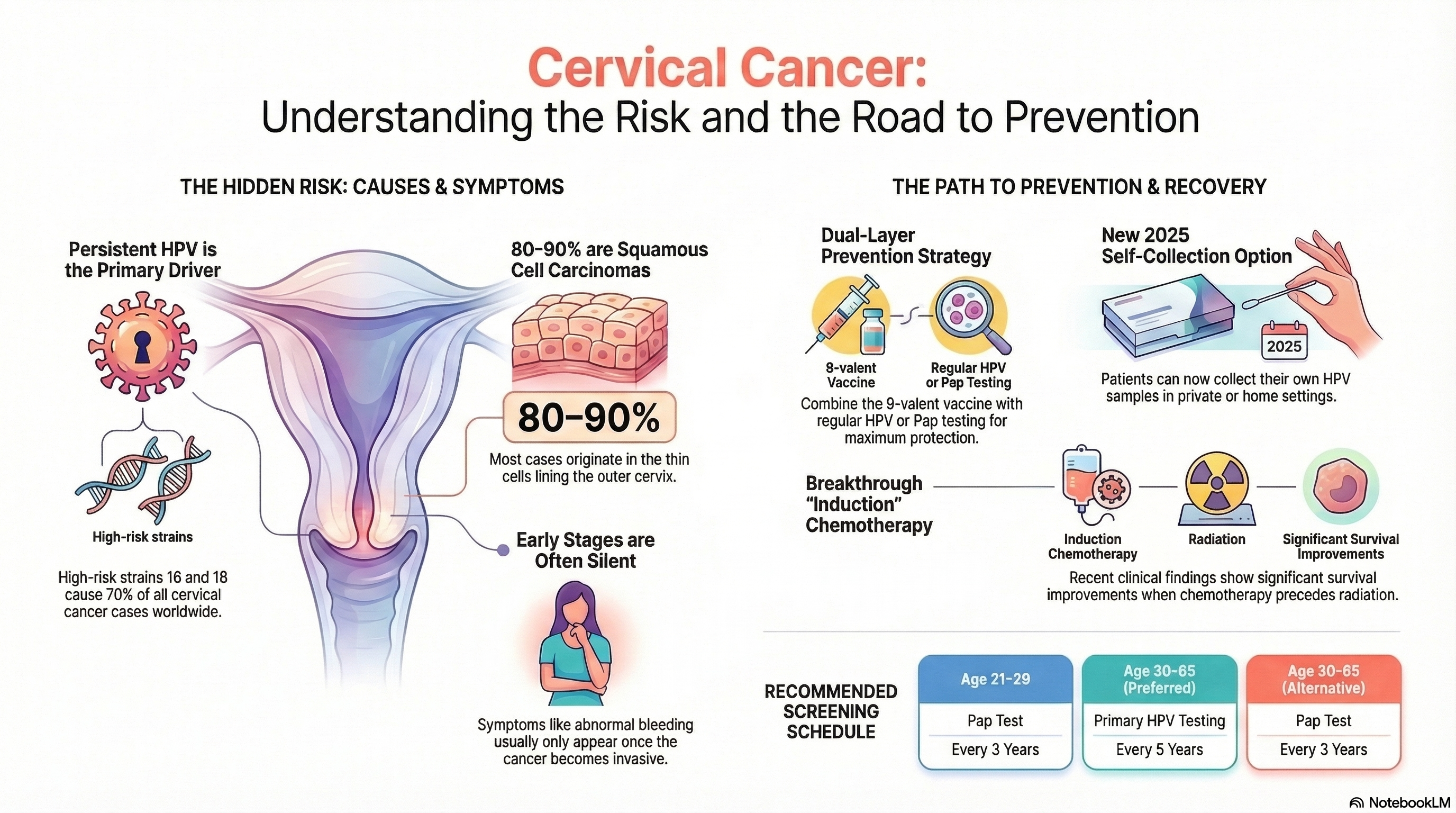
Squamous Cell Carcinoma: The most common type (80–90%), originating in the thin, flat cells lining the outer part of the cervix.
-
Adenocarcinoma: Developing from the column-shaped glandular cells that line the cervical canal.
Before cancer develops, the cells of the cervix often go through "precancerous" changes known as dysplasia or CIN (Cervical Intraepithelial Neoplasia). If these changes are found and treated early, cancer can be prevented entirely.
Causes of Cervical Cancer
The primary cause of cervical cancer is a long-lasting infection with high-risk types of HPV.
-
The Role of HPV: HPV is a group of more than 200 related viruses. It is so common that most sexually active people will get it at some point. In 90% of cases, the immune system clears the virus within two years. However, when the virus persists, it can damage the DNA of cervical cells, leading to cancer over 10 to 20 years.
-
High-Risk Strains: Types 16 and 18 are responsible for about 70% of all cervical cancer cases worldwide.
-
Other Contributing Factors: While HPV is the main driver, other factors increase the risk that an infection will become cancerous:
-
Smoking: Tobacco byproducts damage the DNA of cervical cells and weaken the immune system’s ability to fight HPV.
-
Immune System Suppression: Conditions like HIV or the use of immunosuppressant drugs make it harder for the body to clear the virus.
-
Long-term Oral Contraceptives: Use for more than five years is associated with an increased risk.
-
Symptoms of Cervical Cancer
Early-stage cervical cancer and precancerous lesions typically have no symptoms. This is why regular screening is critical. Symptoms usually only appear once the cancer has become invasive.
Common signs include:
-
Abnormal Vaginal Bleeding: Bleeding after intercourse, between periods, or after menopause.
-
Unusual Discharge: Vaginal discharge that may be watery, pink, or foul-smelling.
-
Pelvic Pain: Pain during sexual intercourse or general pain in the pelvic region.
-
Advanced Symptoms: In later stages, symptoms may include leg swelling, difficulty urinating (due to kidney blockage), or bone pain.
Diagnosis of Cervical Cancer
Diagnosis typically follows an abnormal screening result (Pap or HPV test).
-
Colposcopy: A doctor uses a special magnifying instrument (colposcope) to look closely at the cervix.
-
Biopsy: A small sample of tissue is removed from the cervix and examined under a microscope. This is the only way to confirm if cancer is present.
-
Imaging: If cancer is found, tests such as MRI, PET-CT, or CT scans are used to determine if the cancer has spread to other parts of the body (staging).
-
Staging: Cervical cancer is staged from I (confined to the cervix) to IV (spread to distant organs like the lungs or liver).
Treatment of Cervical Cancer
Treatment depends on the stage of the cancer, the patient's age, and whether they wish to have children in the future.
-
Surgery: For early-stage cancer, a hysterectomy (removal of the uterus) is common. In very early cases, fertility-sparing options like a trachelectomy (removing only the cervix) may be possible.
-
Radiation Therapy: High-energy beams are used to kill cancer cells. This often includes brachytherapy, where a radioactive source is placed inside the vagina near the tumor.
-
Chemotherapy: Often used alongside radiation (chemoradiation) to make the treatment more effective. A 2024 breakthrough showed that giving a short course of "induction" chemotherapy before radiation significantly improves survival rates.
-
Immunotherapy: Drugs like pembrolizumab help the immune system recognize and attack cancer cells, particularly in advanced or recurrent cases.
Prevention of Cervical Cancer
Cervical cancer is one of the most preventable cancers thanks to a "dual-layer" approach of vaccination and screening.
-
HPV Vaccination: The 9-valent vaccine (Gardasil-9) protects against the HPV types that cause 90% of cervical cancers. It is most effective when given between ages 9 and 14 but is approved for adults up to age 45.
-
Regular Screening:
-
Ages 21–29: Pap test every 3 years.
-
Ages 30–65: Primary HPV testing every 5 years (preferred) or a Pap test every 3 years.
-
-
Self-Collection: As of 2025, patient self-collection of HPV samples is an approved option, allowing women to collect their own samples in a private or home setting.
-
Lifestyle Changes: Quitting smoking and using condoms (which reduce but do not entirely eliminate HPV risk) are important preventive steps.