


What is Chlamydia?
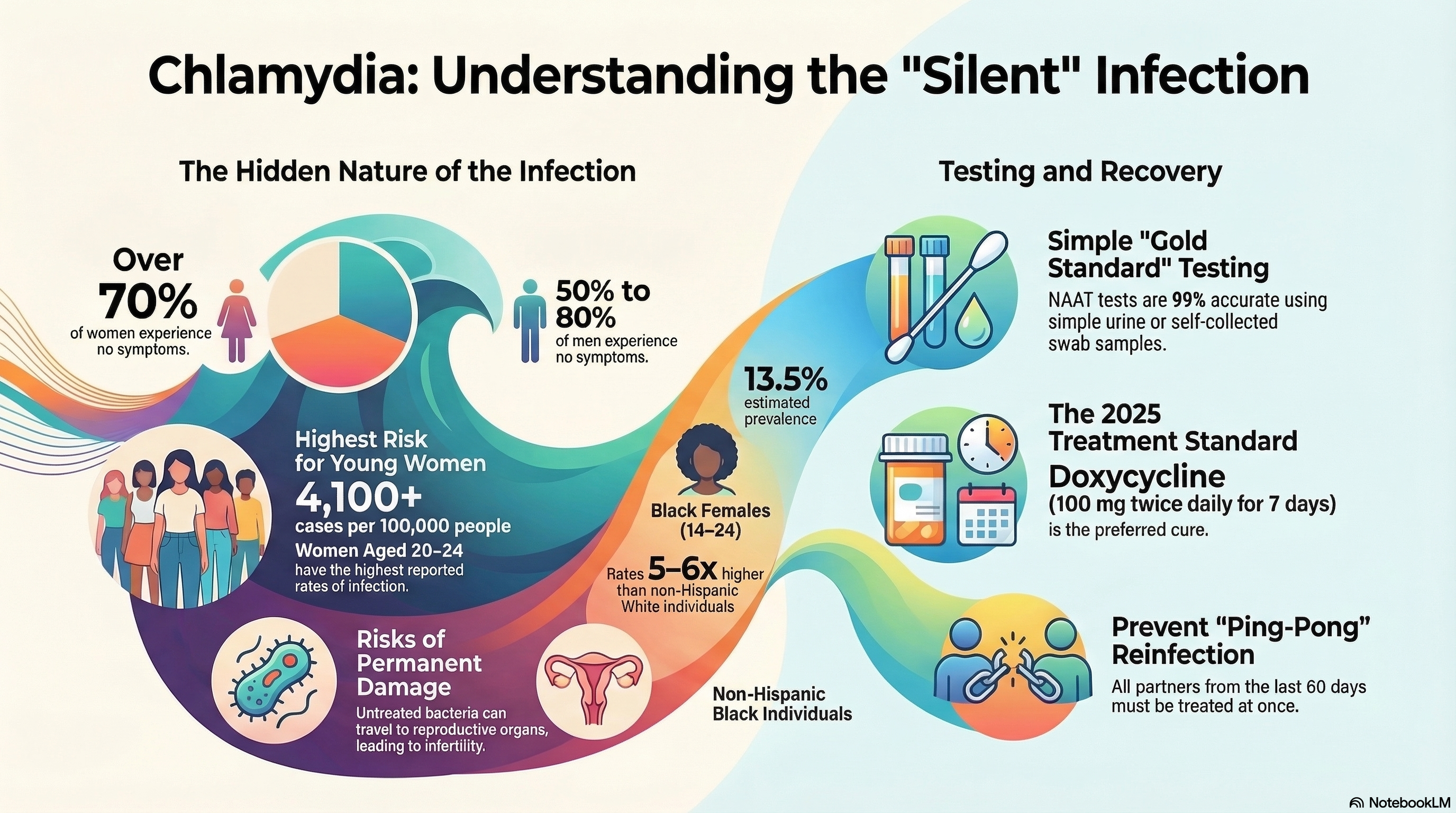
Chlamydia is a common infection that can be easily cured with the right antibiotics. However, it is often called a "silent" infection because the majority of people—over 70% of women and 50% to 80% of men—do not have any symptoms.
The infection is most commonly found in the cervix in women and the urethra (the tube where urine comes out) in men. If left untreated, the bacteria can travel higher into the reproductive organs, leading to permanent damage and infertility.
Causes of Chlamydia
Chlamydia is highly contagious and is spread through direct contact with infected bodily fluids.
-
Sexual Transmission: It is spread through vaginal, anal, or oral sex with someone who has the infection. It can be transmitted even if ejaculation does not occur.
-
Childbirth: An infected mother can pass the bacteria to her baby during a vaginal delivery. This can lead to serious eye infections (conjunctivitis) or pneumonia in the newborn.
-
Groups at Higher Risk: * Age: Young women aged 20–24 have the highest reported rates (over 4,100 cases per 100,000 people).
-
Racial Groups: Significant disparities exist due to differences in healthcare access and social factors. Rates among non-Hispanic Black individuals are 5 to 6 times higher than among non-Hispanic White individuals. Among sexually active Black females aged 14–24, the prevalence is estimated at 13.5%.
-
It is important to note that you cannot catch chlamydia from casual contact like hugging, kissing, or sharing toilet seats, swimming pools, or towels.
Symptoms of Chlamydia
Most people with chlamydia have no idea they are infected. When symptoms do appear, they usually show up 1 to 3 weeks after exposure.
In Women:
-
Abnormal or yellowish vaginal discharge.
-
A burning sensation when urinating.
-
Bleeding between periods or after sex.
-
Pain during intercourse or lower abdominal pain.
In Men:
-
A cloudy or watery discharge from the tip of the penis.
-
Pain or burning during urination.
-
Pain and swelling in one or both testicles (though this is less common).
Other Sites:
-
Rectal: Pain, discharge, or bleeding in the rectum.
-
Throat: Usually no symptoms, but can cause a mild sore throat.
-
Eyes: Redness, itching, and discharge if infected fluid touches the eyes.
Diagnosis of Chlamydia
Because the infection is often silent, regular screening is the only way to know if you are infected. Experts recommend annual screening for all sexually active women under age 25.
-
NAAT Testing: Nucleic Acid Amplification Tests (NAATs) are the "gold standard" for diagnosis. They are over 99% accurate at identifying the bacteria.
-
Simple Samples: In most cases, a pelvic exam is not required. Testing can be done using:
-
A "first-catch" urine sample (the first part of your stream).
-
A simple swab of the vagina (which you can often collect yourself in a private bathroom).
-
Swabs of the throat or rectum if you have had oral or anal sex.
-
-
Repeat Testing: Because reinfection is common, it is often recommended to get re-tested about three months after completing treatment.
Treatment of Chlamydia
Chlamydia is easily cured with a short course of antibiotics.
-
Preferred Treatment: As of 2025, the primary treatment is Doxycycline (100 mg twice daily for 7 days). This is highly effective and is now preferred over older treatments for most types of chlamydia.
-
Alternative for Pregnancy: If you are pregnant, your doctor will likely prescribe a single 1-gram dose of Azithromycin or a week of Amoxicillin, as Doxycycline is not recommended during pregnancy.
-
Partner Treatment: To prevent "ping-pong" reinfection, it is essential that all sexual partners from the last 60 days are treated at the same time, even if they have no symptoms.
-
The 7-Day Rule: You must wait a full 7 days after starting treatment (and until your partner has finished theirs) before having any sexual contact to ensure the infection is gone.
Prevention of Chlamydia
You can take several steps to protect yourself and your partners from chlamydia.
-
Consistent Condom Use: Using latex or polyurethane condoms correctly every time you have sex significantly reduces the risk of transmission.
-
Regular Screening: If you are under 25 or have new or multiple partners, get tested once a year. Early detection prevents the infection from causing permanent damage.
-
Mutual Monogamy: Staying in a long-term relationship with one partner who has been tested and is known to be uninfected is the most effective way to avoid STIs.
-
Avoid Douching: Douching can remove "good" bacteria from the vagina and increase the risk of an infection spreading upward into the uterus.
-
Vaccine Research: While there is currently no vaccine for chlamydia, several are in advanced clinical trials as of 2025 and may be available in the future.