

What is Cholecystitis?
The gallbladder acts as a reservoir for bile, a fluid that helps your body digest fats. Cholecystitis occurs when bile becomes trapped in the gallbladder, leading to irritation, pressure, and eventual infection.
There are two primary forms of this condition:
-
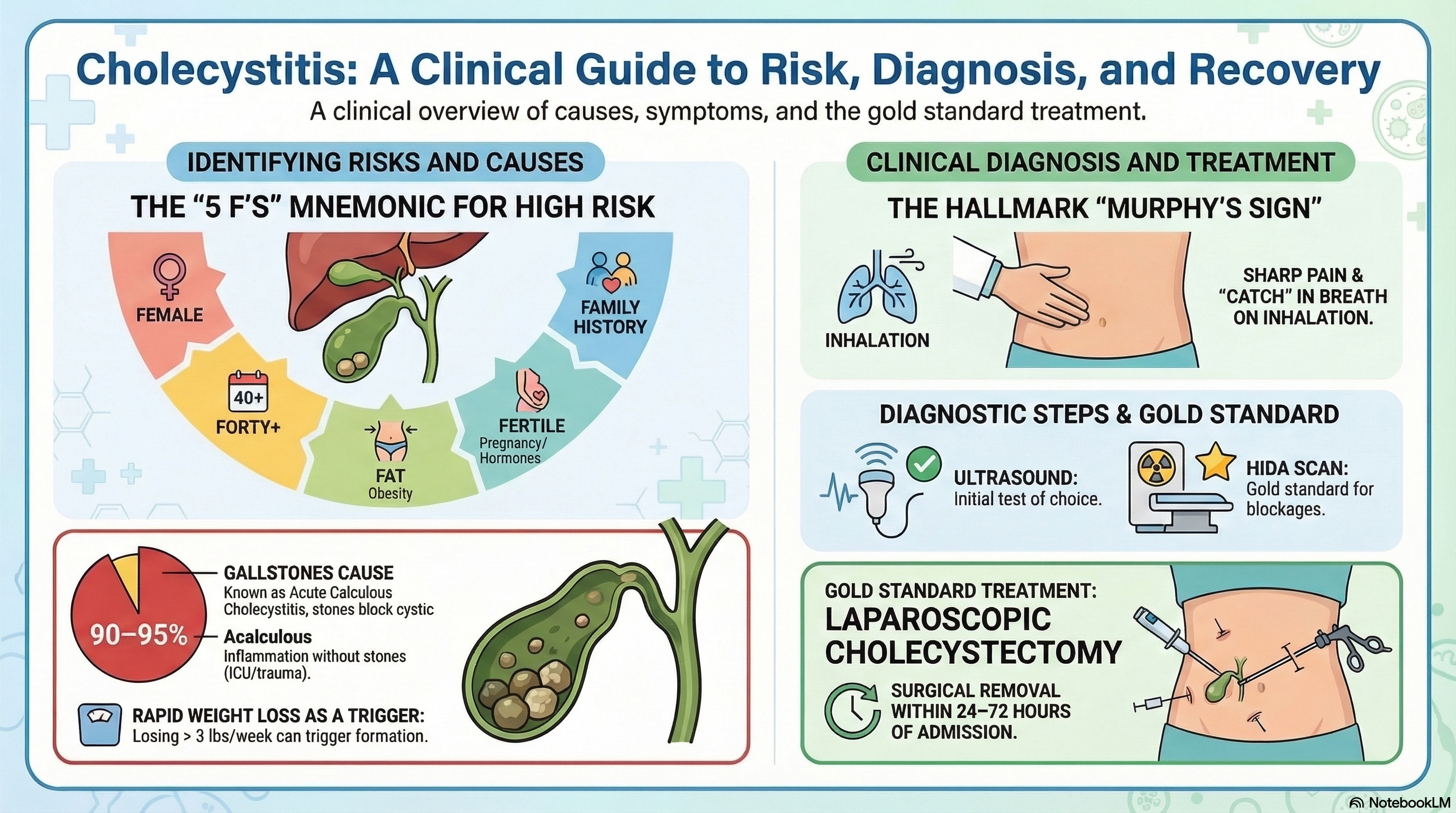
Acute Calculous Cholecystitis (90–95% of cases): This occurs when a gallstone becomes stuck in the cystic duct (the tube leading out of the gallbladder), blocking the flow of bile.
-
Acalculous Cholecystitis (5–10% of cases): This is inflammation without gallstones. It typically occurs in critically ill patients (such as those in the ICU) due to severe dehydration, trauma, or long periods of fasting.
Causes of Cholecystitis
The vast majority of cases are caused by gallstones. These are hardened deposits of digestive fluid that can vary in size from a grain of sand to a golf ball.
Risk Factors (The "5 F's"): Medical professionals often use this mnemonic to identify those at highest risk:
-
Female: Women are more likely to develop gallstones, partly due to hormonal factors.
-
Forty: Risk increases significantly after age 40.
-
Fat: Obesity increases the amount of cholesterol in your bile, which forms stones.
-
Fertile: Pregnancy or the use of birth control/hormone therapy increases risk.
-
Family history/Fair: Genetics and certain ethnic backgrounds (Northern European or Native American) play a role.
Other risks include rapid weight loss (such as after bariatric surgery) and diabetes.
Symptoms of Cholecystitis
Symptoms often appear suddenly, frequently after a heavy or fatty meal.
-
Severe Pain: Intense, constant pain in the right upper quadrant of your abdomen or the middle of your stomach. Unlike a typical "gallbladder attack" (biliary colic), this pain lasts longer than six hours.
-
Radiating Pain: The pain may spread to your right shoulder or back (scapula).
-
Murphy’s Sign: A hallmark of the condition where you experience sharp pain and catch your breath when a doctor presses under your right ribs while you inhale.
-
Nausea and Vomiting: Occurs in about 90% of patients.
-
Fever: A low-grade fever often accompanies the inflammation.
Diagnosis of Cholecystitis
Because abdominal pain can have many causes, doctors use a combination of physical exams and imaging to confirm cholecystitis.
-
Abdominal Ultrasound: This is the initial "test of choice." It is highly accurate at showing gallstones, gallbladder wall thickening, and fluid buildup.
-
HIDA Scan: If the ultrasound is unclear, a HIDA scan (hepatobiliary scintigraphy) is the "gold standard." It involves a radioactive tracer that shows if the cystic duct is truly blocked.
-
Blood Tests: Doctors look for a high white blood cell count (a sign of infection) and elevated liver enzymes or bilirubin.
-
CT Scan: Often used to check for complications like a perforated (burst) gallbladder or an abscess.
Treatment of Cholecystitis
Hospitalization is required for all cases of acute cholecystitis to stabilize the patient and prevent the gallbladder from rupturing.
Immediate Medical Care:
-
Fasting: You will be asked not to eat or drink (NPO) to rest the gallbladder.
-
IV Fluids and Pain Relief: To keep you hydrated and manage the severe pain.
-
Antibiotics: To treat or prevent a bacterial infection.
Surgical Intervention: The gold standard treatment is the Laparoscopic Cholecystectomy (surgical removal of the gallbladder).
-
Timing: "Early" surgery (within 24–72 hours of admission) is preferred. Research shows this leads to fewer complications and shorter hospital stays compared to waiting.
-
Alternative for High-Risk Patients: If a patient is too ill for surgery, a doctor may place a percutaneous cholecystostomy tube—a drain inserted through the skin into the gallbladder to empty the infected bile.
Prevention of Cholecystitis
You can lower your risk of cholecystitis by managing the factors that lead to gallstone formation.
-
Maintain a Healthy Weight: Obesity is a major driver of gallstones, but it is important to lose weight gradually. Rapid weight loss (more than 3 pounds per week) can actually cause gallstones to form.
-
Eat a High-Fiber Diet: Focus on whole grains, fruits, and vegetables while limiting saturated fats and refined sugars.
-
Stay Active: Regular physical activity helps maintain a healthy weight and keeps your cholesterol levels in check.
-
Manage Underlying Conditions: If you have diabetes, keep your blood sugar levels strictly controlled.