


What is Conjunctivitis?
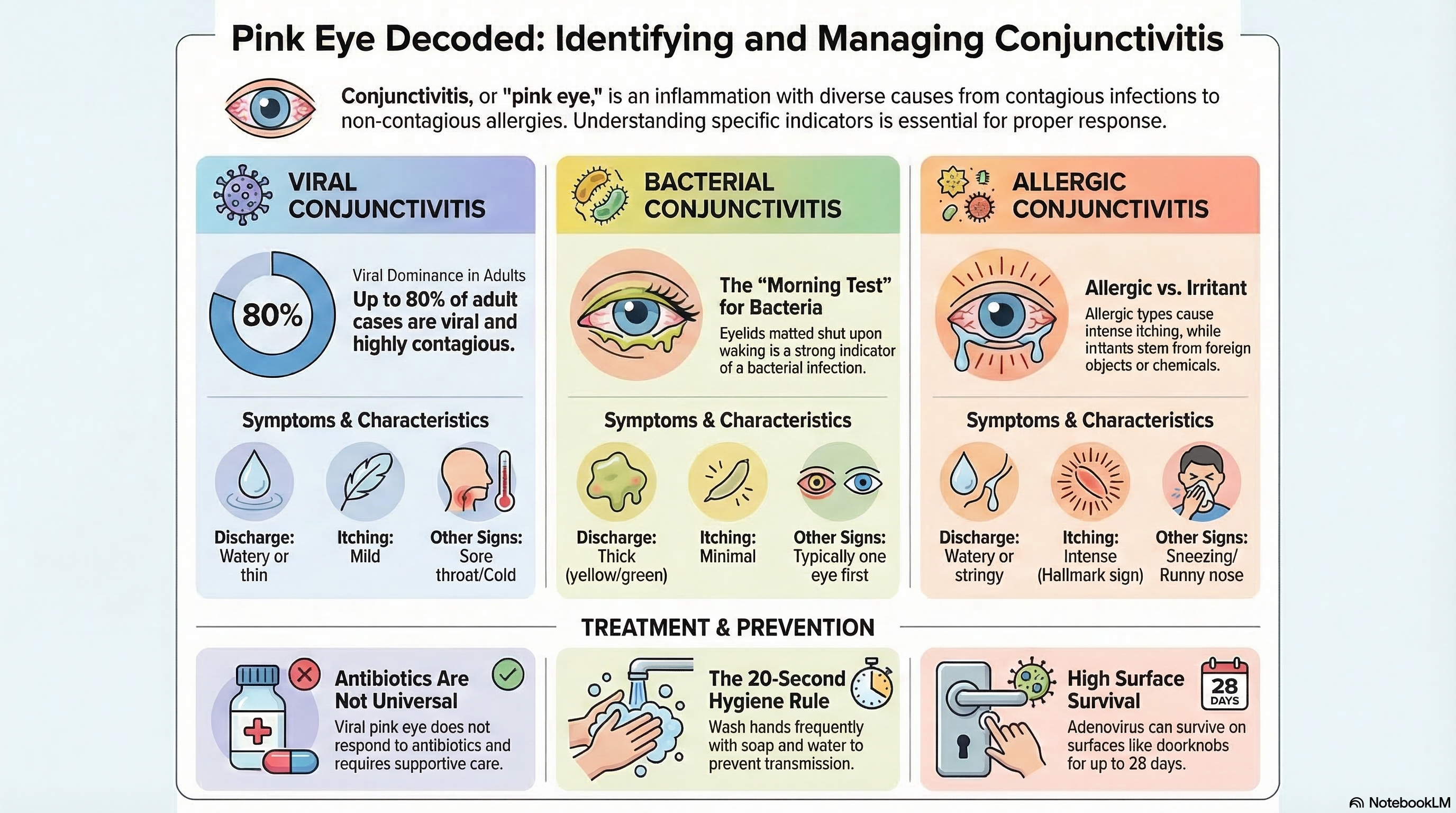
There are several types of conjunctivitis, and identifying the type is the first step in effective management. While the symptoms overlap, the underlying cause determines how contagious the condition is and how it should be treated.
-
Viral Conjunctivitis: The most common form in adults (up to 80% of cases). It is highly contagious and often accompanies a common cold or sore throat.
-
Bacterial Conjunctivitis: More common in children (up to 75% of pediatric cases). It is also highly contagious and is caused by bacteria like Staph or Strep.
-
Allergic Conjunctivitis: Triggered by allergens like pollen, animal dander, or dust mites. It is not contagious and usually affects both eyes at the same time.
-
Irritant Conjunctivitis: Caused by foreign objects, chemicals (like chlorine in a pool), or smoke entering the eye.
Causes of Conjunctivitis
The cause of "pink eye" depends on the type you have contracted:
-
Infection: Most infectious cases are caused by the adenovirus (the same virus family that causes the common cold). Bacterial cases are caused by various germs that can enter the eye through touch or contaminated objects.
-
Allergens: Your body reacts to substances it perceives as harmful by releasing histamine, which causes inflammation and itching.
-
Transmission: Infectious pink eye spreads through close contact with an infected person, coughing, sneezing, or touching surfaces that the virus or bacteria can live on (adenovirus can survive for up to 28 days on surfaces).
Symptoms of Conjunctivitis
The primary sign of any conjunctivitis is a reddish or pinkish color in the white of the eye. Other symptoms vary by type:
| Symptom | Viral | Bacterial | Allergic |
| Eye Color | Pink / Red | Pink / Red | Pink / Red |
| Discharge | Watery or thin | Thick (yellow/green) | Watery or stringy |
| Itching | Mild | Minimal | Intense / Hallmark |
| Eyelids | Swollen | Matted shut in morning | Swollen |
| Other | Sore throat / Cold | Typically one eye first | Sneezing / Runny nose |
Diagnosis of Conjunctivitis
In most cases, a healthcare provider can diagnose conjunctivitis through a simple physical exam and a review of your symptoms.
-
Clinical Exam: The doctor will check for redness, the type of discharge, and whether you have a history of allergies.
-
The "Morning Test": If your eyelids are stuck together when you wake up, it is a strong indicator of a bacterial infection.
-
Lab Tests: These are rarely needed but may be performed if the infection is severe, chronic, or occurs in a newborn (neonatal conjunctivitis). A swab of the discharge may be taken for testing.
Treatment of Conjunctivitis
Treatment is focused on relieving symptoms and, if necessary, clearing the infection.
-
Viral: Since this is caused by a virus, antibiotic drops will not work. Treatment involves supportive care like cold compresses and artificial tears. It usually clears up on its own in 1–2 weeks.
-
Bacterial: Doctors may prescribe antibiotic eye drops or ointments. However, many cases are mild and will clear up within a week even without medication.
-
Allergic: Treatment includes removing the allergen and using over-the-counter or prescription antihistamine eye drops and "mast cell stabilizers."
-
Supportive Care: Regardless of the type, using a cool compress on the outside of closed eyelids can provide significant comfort.
Prevention of Conjunctivitis
Preventing the spread of infectious pink eye is vital, especially in households, schools, and daycare centers.
-
Hand Hygiene: Wash your hands frequently with soap and water for at least 20 seconds. This is the most important preventive step.
-
Don't Touch Your Eyes: Avoid rubbing or touching your eyes, which can transfer germs or allergens.
-
Stop the Share: Do not share towels, washcloths, pillows, or eye makeup with others.
-
Contact Lens Care: If you wear contacts, follow your doctor’s instructions for cleaning and replacing them. Discard any lenses or cases used during an infection.
-
Disinfect: Clean surfaces like doorknobs and countertops frequently if someone in your home has pink eye.